
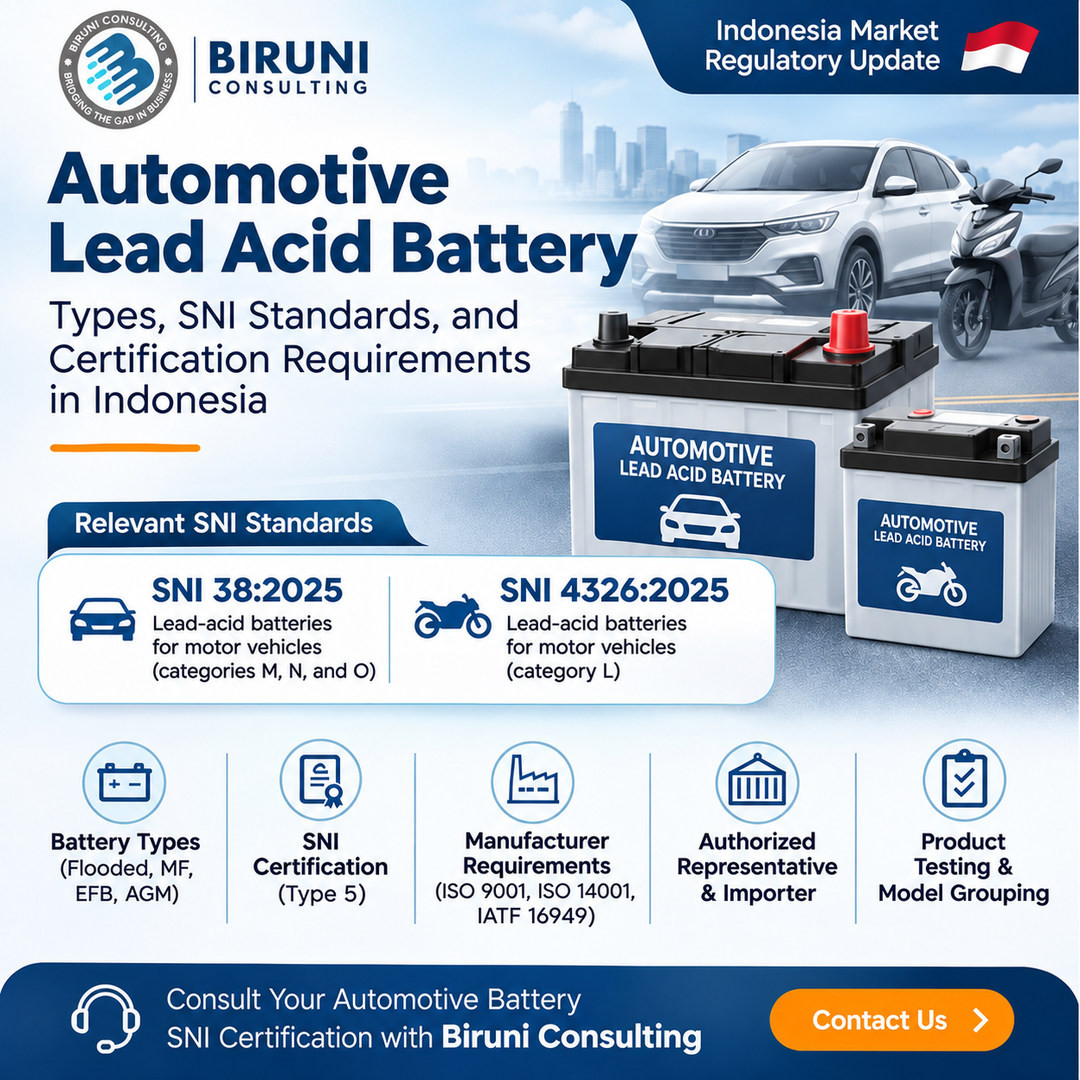
Document completeness is among the first indicators of automotive battery certification readiness. Domestic and overseas factories share several requirements, while imported products add Authorized Representative documentation and potentially separate importer records.
Legal entity and production site
Prepare manufacturer incorporation certificates, industrial business authorization, legal names, addresses and production-site identification. Certain foreign documents are subject to legalization and Indonesian translation requirements in the draft.
Where a group operates multiple manufacturing facilities, each site should be identified because certification cannot automatically be extended to every address.
Management systems and manufacturing facilities
Prepare ISO 9001:2015 and/or IATF 16949:2016 alongside ISO 14001:2015. Facility lists, testing equipment and quality-control procedures support factory-readiness assessment.
A Type 5 factory audit evaluates actual production practices, not just possession of certificates or manuals.
Trademark, AR and importer documents
Review class 9 trademark ownership, license agreements and DJKI recordal according to the brand structure. Overseas factories should prepare AR corporate records, business permits, appointment deeds, warehouse evidence and SIINas access.
OEM, contract manufacturing and trademark cooperation can introduce additional documents because the trademark owner and manufacturer are not necessarily the same entity.
Model list and technical evidence
Prepare a model-by-model table covering brand, type, voltage, capacity, technology, vehicle category, labels and specifications. Technical catalogues, photographs, test reports and design details support representative sampling assessment.
When the AR appoints a separate importer, the legal importer documentation differs by assembly or aftersales purpose.
Organizing documents by legal owner
Separate files into four owners: manufacturer, trademark holder, Indonesian Authorized Representative and importer. For shared documents, record the issuing party, validity and legal relationship. This prevents a purchase contract from being mistaken for a trademark license or an importer's NIB from being treated as a factory manufacturing permit.
At the final precheck, reconcile company names and addresses across every record. If headquarters and production sites differ, identify both clearly. Traceability supports factory audits, appointment documentation and import control.
Frequently Asked Questions
Is a product catalogue enough to apply?
No. Factory legal records, quality certification, brand and applicant structure also need review.
Can existing IEC test reports be used?
Potential reuse depends on the scheme, report age, laboratory scope and missing or additional test parameters.
Related Reading
- SNI Certification Services for Car and Motorcycle Batteries in Indonesia
- SNI 38:2025 Car Battery Requirements in Indonesia
- SNI 4326:2025 Motorcycle Battery Requirements in Indonesia
Automotive Battery SNI Consultation
For an initial assessment, prepare a model list and specifications, manufacturer identity, management-system certificates, trademark documents and your proposed Authorized Representative/importer arrangement. Biruni Consulting can review the documentation and identify the next regulatory steps.
Regulatory status: SNI 38:2025 and SNI 4326:2025 are BSN technical standards. Draft mandatory-SNI provisions must be verified against the enacted regulation, if any. Certification outcomes and timelines are not guaranteed.