
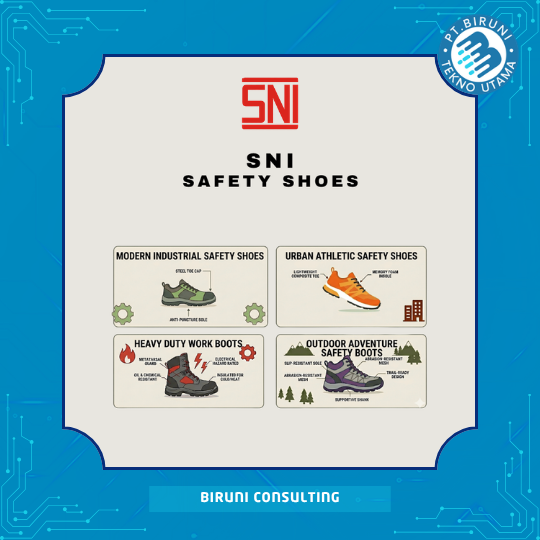
SNI for Safety Shoes in Indonesia
SNI for safety shoes is a national standard in Indonesia established to ensure that protective footwear circulating in the market meets safety, quality, and durability requirements for workplace environments. Safety shoes are designed to protect workers from injuries such as heavy object impact, sharp object punctures, slipping hazards, and exposure to certain chemicals.
Safety shoes are classified as personal protective equipment (PPE) and are considered high-risk products because they are used in hazardous working environments such as construction, manufacturing, and industrial sectors. Therefore, safety shoes must undergo testing and certification according to SNI standards before being marketed in Indonesia.
The implementation of SNI for safety shoes ensures that every product provides adequate protection according to workplace safety requirements.
Types of Safety Shoes in SNI Standards
1 Steel toe cap safety shoes for toe protection
2 Anti-slip safety shoes to prevent slipping in workplaces
3 Puncture-resistant safety shoes for sole protection
4 Electrical hazard safety shoes for high-voltage environments
5 Heat-resistant safety shoes for high-temperature areas
6 Chemical-resistant safety shoes for industrial use
7 Waterproof safety shoes for wet environments
8 High-cut safety shoes for ankle protection
Each type of safety shoe is designed for different working conditions, so testing standards vary depending on the specific risks involved.
Why SNI for Safety Shoes Is Important
SNI for safety shoes plays a crucial role in protecting workers in high-risk environments. Non-standard footwear may fail to provide adequate protection, increasing the risk of workplace injuries.
In addition, SNI ensures consistent product quality in the Indonesian market, helping industries and end-users rely on standardized safety performance.
How to Obtain SNI Certification
Product Identification
The initial step is identifying the type of safety shoes based on their protective function. This is necessary to determine the applicable SNI standard for certification.
Document Preparation
1 NIB and OSS
2 Technical product specifications
3 Material and product design details
4 Product labels and information
These documents serve as the foundation for the certification process and must be properly prepared to avoid delays.
Certification Submission
Submitted through a Product Certification Body accredited by Komite Akreditasi Nasional
Laboratory Testing
1 Compression resistance testing
2 Slip resistance testing
3 Puncture resistance testing
4 Electrical or heat resistance testing depending on product type
SPPT SNI Issuance
If all requirements are met, SPPT SNI is issued as official proof that the safety shoes comply with Indonesian national standards and are eligible for legal distribution.
SNI Processing Obstacles
The certification process for safety shoes may face challenges such as inconsistent laboratory test results, incomplete documentation, and limited understanding of technical standards.
In addition, the certification process may take time due to multiple stages of testing and evaluation that must be completed before approval.
Contact Us
Biruni Consulting helps companies in the SNI safety shoes certification process professionally and in accordance with applicable regulations in Indonesia
Our services include
1 Consultation on safety shoes SNI regulations
2 Identification of product category standards
3 Certification document preparation
4 Laboratory testing assistance
5 Certification processing until SPPT SNI issuance
With extensive experience in product certification in Indonesia, Biruni Consulting helps ensure safety shoes meet workplace safety standards and are ready for legal distribution in Indonesia
Contact Us for safety shoes SNI certification services consultation and SPPT SNI processing