
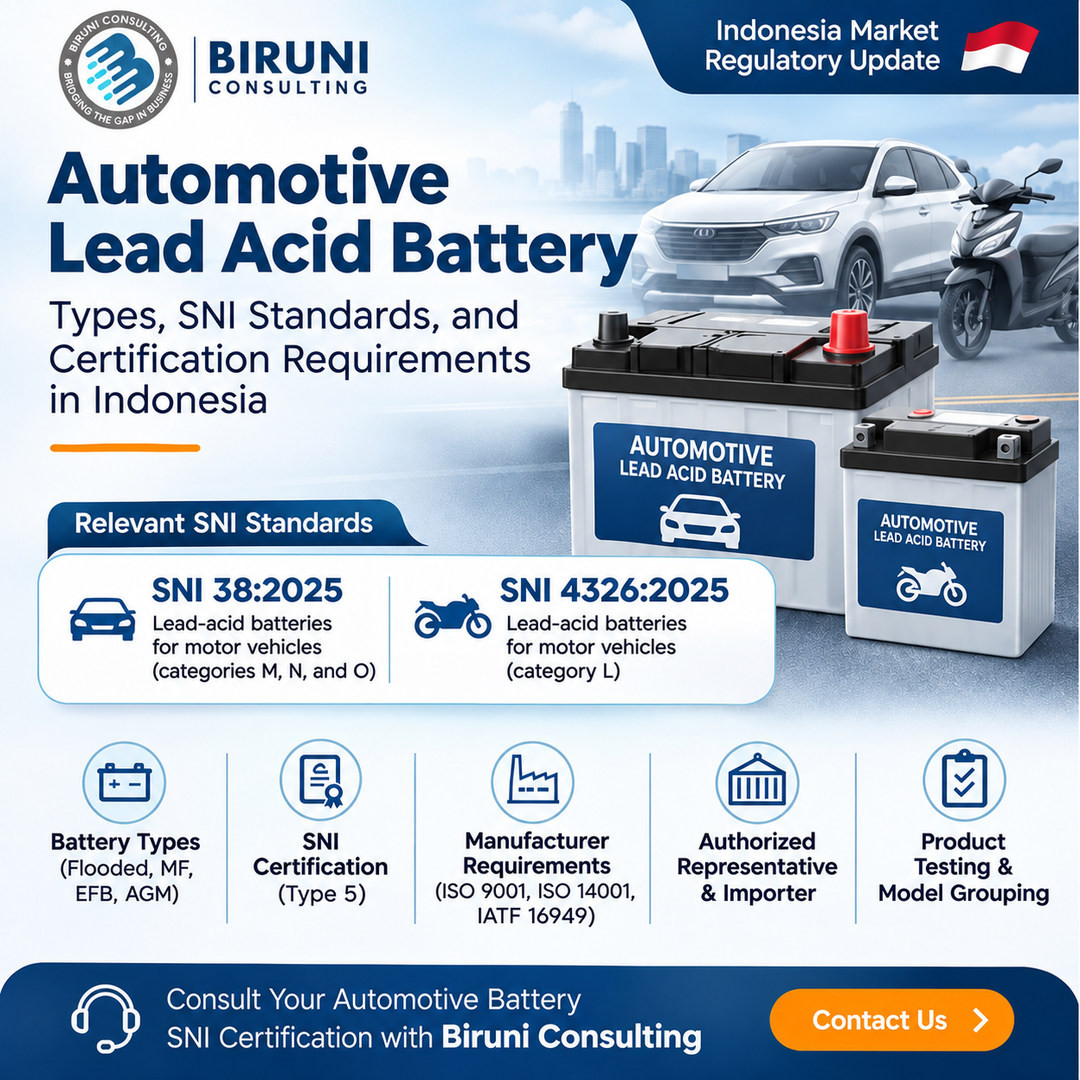
The subject of battery factory legalisation apostille Indonesia SNI needs careful assessment before manufacturers, brand owners or importers proceed with an Indonesian SNI application. This guide explains the documentation, practical risks and regulatory distinctions relevant to the automotive battery sector.
Business context and practical meaning
Foreign corporate records are often issued in Chinese or English and may not satisfy Indonesian filing form requirements without additional steps. Incorrect legalisation can delay document review.
SNI compliance does not end with a passing laboratory report. The draft separates certification-body audit, file evaluation, validation, SNI Certificate issuance, SPPT SNI application and surveillance. Each stage has distinct document holders, decisions and validity periods.
Relevant draft or technical provisions
Draft Article 15(2) discusses legalised copies of overseas establishment and manufacturing permits together with sworn Indonesian translations. Article 59 addresses apostille where the applicable country and documents qualify. Certain quality documents also require Indonesian translation.
An initial assessment should produce a document-gap list, applicant identity for SIINas, filing responsibilities, factory locations, trademark status and an audit/laboratory plan. Legal changes, test schedules and audit findings may extend the overall timeline beyond individual administrative response periods.
Risks to avoid
Do not assume a foreign notarial stamp suffices for every record. Verify the appropriate legalisation or apostille route and consistent legal entity naming.
Treat these proposed administrative requirements as planning guidance, not proof that a final mandatory regulation is already effective. Technical conformity must be assessed against the full standard and competent authorities.
Initial document checklist
For an efficient initial review, prepare the following evidence groups:
- Correct applicant identity and SIINas account.
- Trademark certificate and manufacturer quality documents.
- SNI/SPPT dates and surveillance schedule.
- Test report, corrective-action and validation status.
Recommended next steps
For battery factory legalisation apostille Indonesia SNI, map the product, manufacturing site and documents already held. Send a model list and identify every involved entity so document gaps, cost drivers and the appropriate route can be considered without promising certification results.
Biruni Consulting can support an initial readiness review, identify document gaps and coordinate the relevant certification process where applicable. Final decisions remain with the appointed bodies, laboratories and competent authorities.
Frequently Asked Questions
What matters most for battery factory legalisation apostille Indonesia SNI?
Draft Article 15(2) discusses legalised copies of overseas establishment and manufacturing permits together with sworn Indonesian translations. Article 59 addresses apostille where the applicable country and documents qualify. Certain quality documents also require Indonesian translation.
Are the SNI Certificate and SPPT SNI the same approval?
No. The draft assigns different functions, holders and validity periods.
Related Reading
- SNI Certification Services for Car and Motorcycle Batteries in Indonesia
- SNI 38:2025 Car Battery Requirements in Indonesia
- SNI 4326:2025 Motorcycle Battery Requirements in Indonesia
Automotive Battery SNI Consultation
For an initial assessment, prepare a model list and specifications, manufacturer identity, management-system certificates, trademark documents and your proposed Authorized Representative/importer arrangement. Biruni Consulting can review the documentation and identify the next regulatory steps.
Regulatory status: SNI 38:2025 and SNI 4326:2025 are BSN technical standards. Draft mandatory-SNI provisions must be verified against the enacted regulation, if any. Certification outcomes and timelines are not guaranteed.