
Understanding the Indonesian National Standard
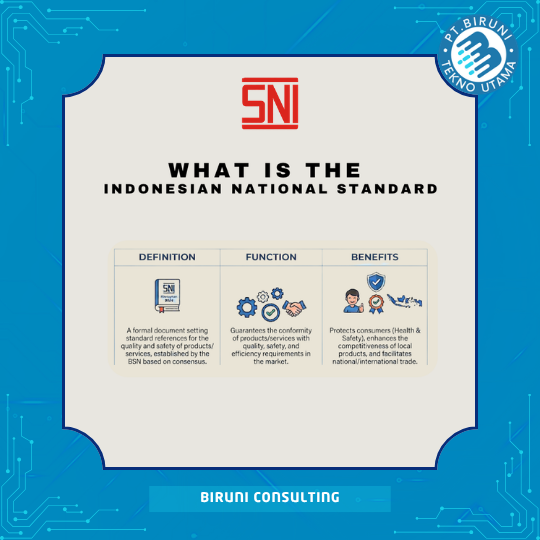
The Indonesian National Standard (SNI) is the national standard established by the National Standardization Agency of Indonesia (BSN) to ensure the quality, safety, performance, health, and environmental sustainability of products, services, systems, and processes distributed within Indonesia.
SNI is developed through a consensus-based process involving government institutions, industry representatives, academic experts, research organizations, professional associations, testing laboratories, and consumer protection organizations. This collaborative approach ensures that every standard reflects technological developments, industrial needs, and public interests while supporting fair competition in the marketplace.
The Indonesian National Standard plays a vital role in improving product quality, protecting consumers, strengthening industrial competitiveness, and supporting national economic development. By implementing SNI, manufacturers demonstrate that their products comply with recognized technical requirements that help ensure consistent quality and safety throughout the product lifecycle.
Objectives of the Indonesian National Standard
The implementation of SNI serves several important purposes beyond regulatory compliance.
Its primary objectives include:
1 Protecting consumers from unsafe or substandard products.
2 Improving product quality and manufacturing consistency.
3 Enhancing the competitiveness of Indonesian products in domestic and international markets.
4 Promoting fair competition by applying common technical requirements.
5 Providing legal certainty for manufacturers, importers, distributors, and consumers.
6 Supporting more efficient manufacturing processes through standardized technical requirements.
Together, these objectives make SNI an essential component of Indonesia’s national quality infrastructure.
Benefits of SNI
SNI provides significant benefits to businesses, consumers, and government authorities.
For manufacturers, SNI certification increases market confidence by demonstrating compliance with recognized quality and safety requirements. Certified products often gain greater acceptance among distributors, retailers, procurement agencies, and customers because they have successfully completed independent conformity assessment procedures.
For consumers, SNI provides assurance that products have been evaluated for quality, safety, and performance according to nationally recognized standards. This helps reduce the risk of purchasing products that fail to meet acceptable technical requirements.
For government institutions, SNI supports effective market surveillance, strengthens consumer protection programs, and encourages continuous improvement in industrial quality throughout Indonesia.
Types of SNI
In general, SNI implementation falls into two categories.
Mandatory SNI
Mandatory SNI applies to products regulated by government ministries or authorized institutions. Products covered by mandatory regulations must comply with the applicable SNI requirements before they may be manufactured, imported, or legally distributed within Indonesia.
Common examples include:
1 Motorcycle helmets.
2 Electrical cables.
3 Certain children’s toys.
4 Certain lighting products.
5 Selected steel products.
6 Certain household electrical appliances.
Voluntary SNI
Voluntary SNI is implemented at the initiative of manufacturers wishing to improve product quality, strengthen customer confidence, and enhance market competitiveness. Although certification is not legally required for these products, many businesses choose to adopt SNI as a demonstration of their commitment to quality.
How Is SNI Certification Obtained?
Obtaining SNI certification involves several structured stages.
Product Identification
The company first determines the applicable product category, certification scope, and relevant Indonesian National Standard.
Document Preparation
Typical certification documents include:
1 Business registration documents.
2 Technical product specifications.
3 Product datasheets.
4 Product labels and packaging information.
5 Additional supporting documents required under the certification scheme.
Certification Application
Applications are submitted to a Product Certification Body (LSPro) accredited by Komite Akreditasi Nasional for the relevant certification scope.
Laboratory Testing
Products undergo laboratory evaluation according to the applicable SNI requirements.
Testing may include:
1 Safety testing.
2 Performance evaluation.
3 Mechanical testing.
4 Electrical testing.
5 Chemical analysis.
6 Durability assessment.
The required testing program depends on the characteristics of the product being certified.
Factory Audit
For certification schemes requiring manufacturing assessment, the Product Certification Body conducts a factory audit to verify production consistency and quality management practices.
SPPT SNI Issuance
After successfully completing all certification requirements, the Product Certification Body issues the Certificate of Authorization for the Use of the SNI Mark (SPPT SNI), confirming that the product complies with the applicable Indonesian National Standard.
Why Understanding SNI Is Important
Understanding the Indonesian National Standard helps businesses identify regulatory obligations before products enter the Indonesian market. Early understanding of applicable standards enables manufacturers and importers to prepare technical documentation, laboratory testing, and certification activities more efficiently, reducing delays and compliance risks.
Compliance with SNI also demonstrates a company’s commitment to product quality and consumer safety. Over time, certified products generally enjoy stronger customer confidence, improved market acceptance, and greater opportunities for long-term business growth in Indonesia.
Contact Us
Biruni Consulting helps companies in the SNI certification process professionally and in accordance with applicable regulations in Indonesia
Our services include
1 Consultation on SNI regulations
2 Identification of applicable standards
3 Certification document preparation
4 Laboratory testing assistance
5 Certification processing until SPPT SNI issuance
With extensive experience in product certification in Indonesia Biruni Consulting helps ensure products comply with applicable standards and are ready for legal distribution in Indonesia
Contact Us for SNI certification consultation services and SPPT SNI processing