
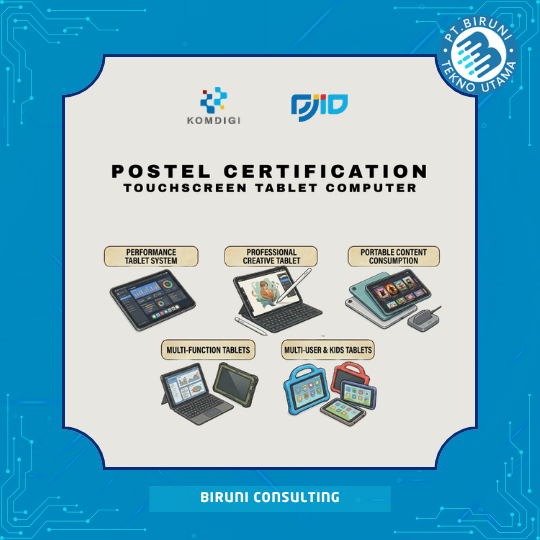
Postel Certification for Touchscreen Tablet Computer and SDPPI Compliance in Indonesia
Touchscreen tablet computers are portable computing devices that combine the functions of a computer and a mobile device with a touch-based interface. These devices are widely used in education, business, healthcare, industry, and personal use due to their portability and ease of operation.
With technological advancement, touchscreen tablets are no longer just computing devices. They are now equipped with connectivity features such as WiFi, Bluetooth, cellular networks, and cloud-based application systems, enabling seamless integration with digital ecosystems.
Because of these wireless communication features, touchscreen tablet computers are classified as electronic devices that use radio frequency spectrum. Therefore, they must comply with Postel (SDPPI) certification requirements before being legally imported and distributed in Indonesia.
What Is a Touchscreen Tablet Computer in Regulatory Context
In regulatory terms, a touchscreen tablet computer is a portable computing device designed for digital processing with a touch-based user interface.
These devices are typically equipped with WiFi, Bluetooth, and in some models cellular connectivity such as 4G or 5G. This allows connection to the internet, cloud systems, and other digital devices.
Due to their wireless communication capabilities, tablets are subject to SDPPI technical regulations before they can be marketed in Indonesia.
Is Postel Certification Required
Postel certification is required for touchscreen tablet computers that include features such as:
- WiFi or Bluetooth connectivity
- Cellular network support (4G/5G SIM card)
- Internet communication features
- Wireless communication modules
These features must be tested to ensure compliance with national frequency regulations and electronic safety standards.
Regulations in Indonesia for Telecommunication Devices
Telecommunication device regulations in Indonesia are managed by SDPPI under the Ministry of Communication and Digital Affairs. The purpose is to ensure that all wireless communication devices meet national technical, safety, and compatibility standards.
These regulations also maintain network stability and protect users from non-compliant electronic devices.
Certification Requirements
Companies must prepare several administrative and technical documents, including:
- Business legality documents such as NIB and OSS
- Technical specifications of the device
- Product user manual
- Communication module datasheet (WiFi / Cellular / Bluetooth)
- Product labeling information
- Accredited laboratory test reports
Certification Process Overview
The certification process involves several stages including product identification, document review, and laboratory testing.
Testing covers radio frequency emissions, electromagnetic compatibility, and electrical safety. Once all requirements are fulfilled, the Postel certificate is issued as official approval for market distribution.
Common Challenges in Certification Process
Common challenges include incomplete documentation, differences between international and local standards, and varying processing times depending on device complexity.
Limited understanding of regulatory requirements may also slow down the certification process, making proper preparation essential for smooth approval.
Contact Us
Biruni Consulting provides professional services for Postel/SDPPI certification for touchscreen tablet computers with connectivity features such as WiFi, Bluetooth, and cellular networks.
We assist companies with:
- Telecommunication regulatory analysis
- Device classification under SDPPI requirements
- Technical and administrative document preparation
- Coordination of accredited laboratory testing
- End-to-end support until certification is issued
With experience in electronic and telecommunication regulations, we help ensure the certification process is efficient, accurate, and fully compliant with applicable requirements.
Contact us for Postel certification consultation so your products can be legally marketed in Indonesia