
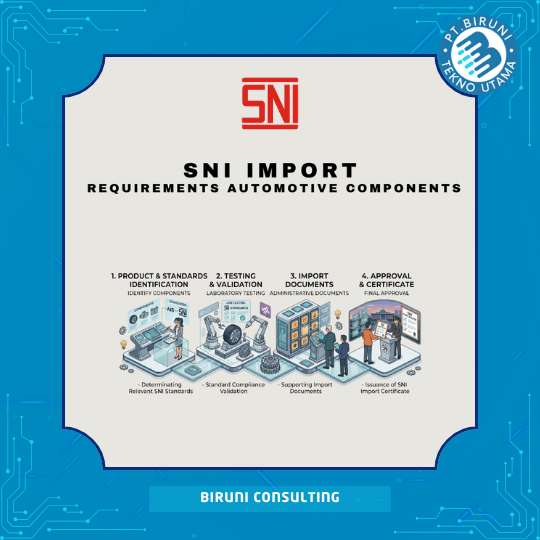
Guide to Import Requirements for Automotive Components in Indonesia
The import of automotive components plays an essential role in supporting manufacturing, vehicle assembly, after-sales services, and the automotive spare parts market in Indonesia. Many companies import automotive parts to support production activities and the aftermarket industry. Before automotive components can enter and be legally distributed in Indonesia, importers must comply with various administrative, customs, and technical regulatory requirements.
Import requirements for automotive components vary depending on the product type, HS Code classification, intended use, and applicable regulations issued by relevant government authorities. Understanding these requirements from the beginning helps companies avoid customs delays, reduce compliance risks, and ensure products can be legally distributed in Indonesia.
What Are the Import Requirements for Automotive Components?
Import requirements for automotive components are a set of regulatory obligations that importers must fulfill before products can be cleared through customs and distributed in Indonesia. These requirements include company legal documentation, import documents, product classification, and compliance with applicable technical standards.
Certain automotive components may also require product testing, certification, or compliance with Indonesian National Standards (SNI), depending on the product category. Importers should ensure that technical documentation and product specifications comply with applicable regulations before shipment.
Why Is It Important to Understand Import Requirements?
Meeting all import requirements helps companies avoid customs clearance issues and ensures products can be legally distributed in Indonesia. Regulatory compliance also reduces the risk of administrative sanctions and additional costs caused by incomplete documentation.
The benefits of understanding automotive component import requirements include:
- Facilitating customs clearance.
- Reducing the risk of cargo detention.
- Ensuring complete import documentation.
- Meeting applicable technical requirements.
- Supporting the legal distribution of products in Indonesia.
How to Comply with Import Requirements for Automotive Components
The compliance process consists of several stages that should be prepared systematically.
Product Identification
The first step is identifying the automotive component, including its function, technical specifications, product category, and HS Code. Proper identification helps determine the applicable regulations and compliance requirements before importation.
Document Preparation
After product identification, importers should prepare administrative and supporting documents in accordance with applicable regulations.
Documents generally required include:
- Company legal documents.
- Business Identification Number (NIB) and relevant business licenses.
- Commercial invoice and packing list.
- Bill of Lading or Air Waybill.
- Product technical specifications.
- Certificate of origin, if required.
- Other supporting documents as required.
Certification Application
If the automotive component falls within a regulated product category, the company must obtain the required approvals or complete the applicable conformity assessment process before import clearance.
Laboratory Testing
For components subject to technical standards, laboratory testing may be required to verify compliance.
Testing may include:
- Dimensional testing.
- Material strength testing.
- Safety testing.
- Product performance testing.
- Durability testing.
- Testing according to applicable standards.
Factory Audit (if applicable)
Certain certification schemes may require a factory audit to verify that the manufacturing process consistently produces compliant products.
Certificate Issuance (if applicable)
Once all requirements have been fulfilled and the evaluation confirms compliance, the relevant certificate or approval document will be issued according to the applicable regulatory scheme.
The Role of Consultants in Importing Automotive Components
Managing automotive component imports requires knowledge of customs regulations, technical standards, and administrative requirements that vary by product category. Experienced consultants assist companies in identifying applicable regulations, preparing documentation, supporting the import process, and ensuring all compliance requirements are fulfilled before products arrive in Indonesia.
Professional assistance from the planning stage helps reduce delays, streamline administrative procedures, and ensure automotive components are legally distributed in accordance with Indonesian regulations.
Contact Us
Biruni Consulting helps companies in the import requirements for automotive components in Indonesia professionally and in accordance with applicable regulations in Indonesia.
Our services include
- Consultation on applicable regulations.
- Identification of applicable standards.
- Certification document preparation.
- Laboratory testing assistance.
- Certification processing until certificate issuance.
With extensive experience in product certification in Indonesia, Biruni Consulting helps ensure products comply with applicable safety, quality, and performance requirements and are ready for legal distribution in Indonesia.
Contact Us for consultation, certification assistance, and certification processing services.