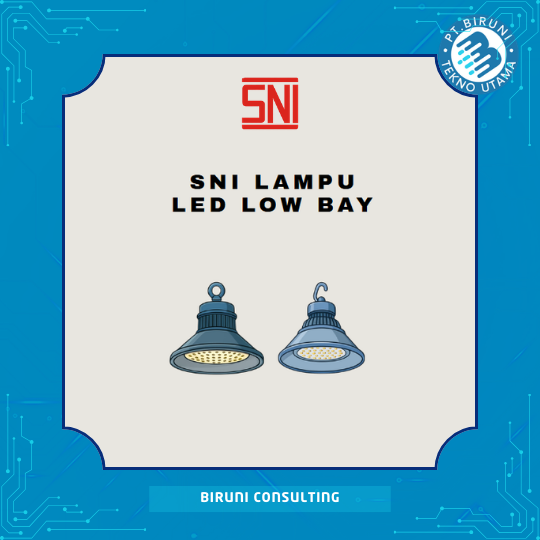
Indonesian National Standard Ensuring Safety and Performance for Low Ceiling Industrial LED Lighting
In Indonesia, certain LED lighting products are required to comply with the Indonesian National Standard (SNI), as regulated by the Ministry of Industry of the Republic of Indonesia under the national standardization system administered by the National Standardization Agency of Indonesia. This mandatory compliance ensures consumer protection and consistent product quality in the domestic market.
Why SNI Certification for LED Low Bay Lighting Is Important
Low bay lighting is commonly used in environments where continuous operation is required, often ranging from 10 to 16 hours per day. Without proper compliance and technical verification, the following risks may occur:
-
Overheating caused by inadequate thermal design
-
Unstable LED drivers resulting in flickering
-
Electrical short circuits due to poor insulation
-
Inconsistent luminous output
-
Inflated lifetime claims that mislead buyers
SNI certification ensures that LED low bay products undergo comprehensive safety testing, photometric evaluation, environmental resistance assessment, and manufacturing quality system verification before entering the market.
Regulatory Framework for SNI LED Low Bay
Mandatory SNI implementation for LED luminaires is based on technical regulations issued by the Ministry of Industry. The relevant standards typically include:
SNI IEC 60598
Specifies general safety requirements for luminaires and lighting fixtures.
SNI IEC 62031
Defines safety requirements for LED modules used in general lighting applications.
SNI IEC 62471
Regulates photobiological safety to protect users from potential optical radiation hazards.
Ingress Protection (IP) Standards
Determine resistance levels against dust and moisture exposure depending on installation environment requirements.
Products categorized under mandatory SNI must obtain a Product Certificate for the Use of SNI Mark (SPPT-SNI) prior to commercial distribution in Indonesia.
Technical Testing Parameters
Certification requires product testing at accredited laboratories covering multiple technical aspects.
Electrical Safety Testing
This includes:
-
Dielectric strength testing
-
Leakage current measurement
-
Insulation resistance verification
-
Temperature rise evaluation
These tests confirm safe operation under typical electrical conditions in industrial and commercial facilities.
Photometric and Performance Testing
Key performance indicators include:
-
Total luminous flux
-
Luminous efficacy (lumens per watt)
-
Light distribution pattern
-
Color Rendering Index (CRI)
-
Correlated Color Temperature (CCT)
Accurate photometric performance ensures proper illumination levels and energy efficiency compliance.
Environmental and Mechanical Resistance Testing
Low bay luminaires must withstand operational conditions, including:
-
Humidity exposure
-
Operational heat endurance
-
Mechanical vibration resistance
-
IP rating verification
Lifetime and Reliability Testing
Manufacturers often claim operational lifetimes between 20,000 and 40,000 hours. Certification testing validates lumen maintenance stability and component durability to confirm these claims.
SNI Certification Process for LED Low Bay Lighting
The general certification stages include:
-
Application submission to an authorized Product Certification Body (LSPro)
-
Sampling and laboratory testing
-
Factory audit and quality management system review
-
Technical evaluation of test results
-
Issuance of SPPT-SNI certificate
-
Periodic surveillance audits to maintain compliance
Both domestic manufacturers and importers must complete these steps before legally marketing their products.
Business Advantages of SNI Compliance
SNI certification offers significant benefits:
-
Legal market access within Indonesia
-
Increased trust from commercial and industrial buyers
-
Qualification for procurement and tender participation
-
Reduced regulatory risks
-
Strengthened brand reputation
Low bay lighting products without SNI certification may be rejected in structured commercial projects.
Risks of Non-Compliance
Failure to secure SNI certification may result in:
-
Import clearance rejection
-
Market withdrawal
-
Administrative sanctions
-
Financial losses and reputational damage
Regulatory authorities actively monitor lighting products to ensure compliance with national standards.
Common Challenges in the Certification Process
Companies frequently encounter:
-
Technical specification mismatches
-
Failure in temperature or efficacy tests
-
Incomplete technical documentation
-
Limited understanding of LSPro procedures
-
Poor preparation for factory audits
Professional certification consultants significantly reduce approval delays and improve success rates.
Conclusion
SNI certification for LED Low Bay lighting is a regulatory requirement designed to ensure electrical safety, consistent performance, environmental durability, and manufacturing quality compliance in Indonesia. Beyond regulatory obligation, it enhances product competitiveness and strengthens consumer confidence.
Biruni Consulting serves as a professional certification consultant assisting manufacturers and importers in obtaining SNI certification for LED Low Bay products. Our services cover technical document preparation, laboratory coordination, audit assistance, regulatory compliance strategy, and full certification management until the SPPT-SNI is officially issued.
With Biruni Consulting as your trusted partner, your LED Low Bay products can enter the Indonesian market legally, efficiently, and with complete regulatory assurance.