
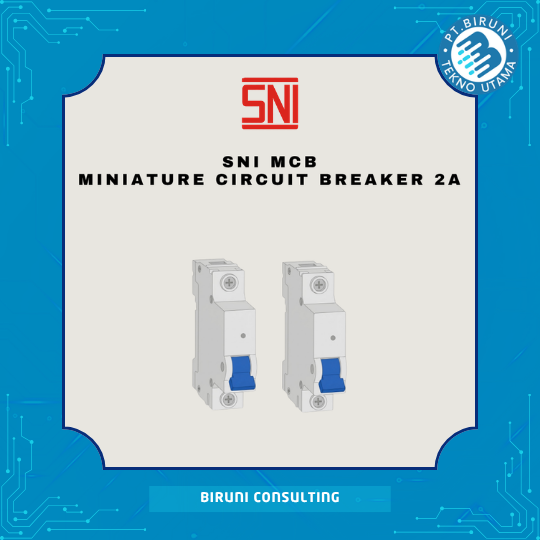
Understanding the 2A Miniature Circuit Breaker
A Miniature Circuit Breaker (MCB) is an automatic electrical protection device designed to interrupt electrical current when abnormal conditions occur, such as overload or short circuit. The purpose of this device is to protect electrical circuits, equipment, and building installations from damage caused by excessive current.
The 2 Ampere Miniature Circuit Breaker (MCB 2A) is specifically designed to protect circuits with relatively small electrical loads. Because the rated current is only 2 amperes, this type of circuit breaker is commonly installed in circuits that require precise protection against even small increases in electrical current.
MCB devices operate based on two main protection mechanisms:
- Thermal protection, which reacts to overload conditions caused by prolonged excessive current.
- Magnetic protection, which reacts instantly when a short circuit occurs.
These mechanisms allow the circuit breaker to disconnect the electrical circuit automatically before overheating or electrical damage occurs.
The 2A Miniature Circuit Breaker is commonly used in applications such as:
- Low-power lighting circuits.
- Electronic equipment circuits.
- Control systems and electrical panels.
- Instrumentation and laboratory equipment.
- Automation systems with small current requirements.
Because MCBs function as safety devices within electrical systems, their design, construction, and performance must comply with strict national standards.
In Indonesia, these requirements are regulated through the Indonesian National Standard established by Badan Standardisasi Nasional. The implementation of mandatory standards is supervised by Kementerian Perindustrian Republik Indonesia, while certification bodies responsible for product evaluation must be accredited by Komite Akreditasi Nasional.
Regulatory Framework for SNI MCB 2A
Miniature Circuit Breakers are categorized as low-voltage electrical protection devices, which means they are required to comply with national safety standards before being imported, manufactured, distributed, or sold in the Indonesian market.
The implementation of SNI standards for MCB products aims to ensure several important objectives:
- Protect electrical installations from damage caused by overcurrent.
- Reduce the risk of electrical fires resulting from short circuits.
- Ensure consistent product quality across manufacturers.
- Provide safety assurance for consumers and building occupants.
- Improve reliability of electrical distribution systems.
Without proper certification and testing, electrical protection devices may fail during critical conditions, potentially causing damage to electrical systems or creating safety hazards for users.
Applicable SNI Standards for Miniature Circuit Breakers
SNI IEC 60898-1
The primary standard used for household and similar circuit breakers in Indonesia is SNI IEC 60898-1. This standard regulates the safety and performance requirements for circuit breakers intended for protection against overcurrent in residential and similar installations.
This standard covers several technical aspects including:
a. Rated current and operational characteristics.
b. Short-circuit breaking capacity.
c. Mechanical endurance and switching durability.
d. Resistance to heat and fire.
e. Electrical insulation performance.
f. Protection against electric shock.
Through these technical requirements, the standard ensures that miniature circuit breakers function reliably under normal operating conditions and respond correctly when electrical faults occur.
Technical Characteristics of a 2A MCB
A 2A Miniature Circuit Breaker has several technical characteristics that differentiate it from higher current circuit breakers. These characteristics determine how the device behaves when electrical conditions exceed the safe operating range.
Typical characteristics include:
- Rated current of 2 amperes, meaning the breaker is designed to protect circuits operating at or below this current level.
- Compact modular design, allowing installation inside electrical distribution panels.
- Thermal-magnetic protection system that reacts to overload and short circuit conditions.
- Compatibility with standard electrical distribution boards used in residential and light commercial installations.
In many cases, 2A circuit breakers are used in specialized circuits where precision protection is required, such as control circuits, measurement equipment, and electronic device protection.
Product Testing Requirements
Before a miniature circuit breaker can receive SNI certification, the product must undergo comprehensive testing in an accredited laboratory. The purpose of testing is to ensure that the circuit breaker meets all safety and performance requirements defined in the applicable standards.
Typical laboratory tests include:
- Short circuit breaking capacity test, verifying the breaker’s ability to safely interrupt fault currents.
- Temperature rise test, ensuring the device does not overheat during normal operation.
- Dielectric strength test, evaluating the insulation capability of the product.
- Mechanical endurance test, verifying that the breaker can operate repeatedly without failure.
- Operational reliability test, ensuring consistent performance during switching operations.
These tests confirm that the product can safely perform its protective function throughout its operational life.
SNI Certification Process for MCB Products
Manufacturers or importers who wish to distribute MCB products in Indonesia must complete a certification process through an accredited product certification body.
The certification process typically includes several important stages.
1. Certification Application
The company submits a formal application for certification to a product certification body accredited by Komite Akreditasi Nasional.
Required documentation generally includes:
a. Company legal documents.
b. Technical specifications of the product.
c. Product design and engineering documentation.
d. Quality management system documentation.
2. Product Testing
Samples of the MCB product are sent to an accredited testing laboratory to verify compliance with applicable SNI standards.
Laboratory evaluation focuses on:
- Electrical performance testing.
- Mechanical durability testing.
- Safety and insulation testing.
- Heat and fire resistance testing.
3. Factory Audit
An on-site factory audit is conducted to evaluate whether the manufacturer maintains consistent production quality.
The audit process normally reviews:
a. Production procedures and quality control systems.
b. Inspection and testing procedures.
c. Traceability of raw materials and components.
d. Implementation of manufacturing standards.
4. Issuance of SNI Certificate
If the product successfully meets all testing and audit requirements, the certification body will issue an official SNI certificate.
Once certified, the manufacturer is permitted to apply the SNI mark on the product and its packaging, indicating compliance with Indonesian national standards.
Benefits of SNI Compliance for MCB Products
Compliance with SNI standards offers significant advantages for both manufacturers and consumers.
Key benefits include:
- Improved safety of electrical installations.
- Reduced risk of electrical fires and equipment damage.
- Increased reliability of electrical protection systems.
- Greater consumer trust in certified products.
- Easier market access for electrical products in Indonesia.
By ensuring that all miniature circuit breakers meet strict technical and safety requirements, the SNI certification system contributes to safer and more reliable electrical infrastructure.
Contact Biruni Consulting
Biruni Consulting is a professional regulatory consulting firm that assists companies in obtaining product certification for electrical equipment in Indonesia, including SNI certification for Miniature Circuit Breaker 2A products.
Our services include comprehensive support throughout the certification process, including:
- Regulatory consultation for SNI electrical product requirements.
- Preparation and review of certification documentation.
- Coordination with accredited testing laboratories.
- Assistance during factory inspection and audits.
- Management of the complete SNI certification process.
With extensive experience in regulatory compliance and product certification, Biruni Consulting helps manufacturers and importers navigate the Indonesian regulatory system efficiently and successfully obtain the necessary approvals for their products.