
Understanding BPOM, Its Functions, Responsibilities, and Role in Product Regulation in Indonesia
In Indonesia, BPOM is a key regulatory authority responsible for ensuring that products circulating in the market are safe, high-quality, and compliant with national regulations. Many businesses and consumers often ask: what does BPOM stand for and why is it important?
BPOM stands for Badan Pengawas Obat dan Makanan, which translates to the National Agency of Drug and Food Control in Indonesia.
The Badan Pengawas Obat dan Makanan plays a critical role in protecting public health by regulating and supervising food, drugs, cosmetics, and health-related products.
What Is BPOM
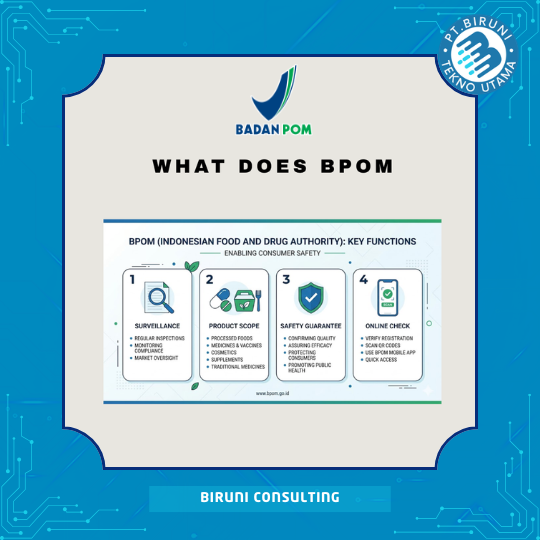
BPOM is a non-ministerial government agency responsible for monitoring the safety and quality of products before and after they are distributed in the market.
Its regulatory scope includes:
- processed food and beverages
- cosmetics and skincare products
- traditional medicines and herbal products
- health supplements
- pharmaceutical products
BPOM ensures that all these products meet safety, quality, and efficacy standards.
Functions and Responsibilities of BPOM
BPOM carries out several essential regulatory functions.
1. Pre-Market Control
Before a product is approved for distribution, BPOM conducts a comprehensive evaluation process.
This includes:
- reviewing product composition
- assessing safety and quality
- verifying labeling and claims
- evaluating manufacturing processes
2. Post-Market Surveillance
After products enter the market, BPOM continues monitoring to ensure ongoing compliance.
Activities include:
- facility inspections
- market sampling
- laboratory testing
- adverse effect monitoring
3. Law Enforcement
BPOM has authority to take action against violations.
Common violations include:
- products without distribution permits
- use of prohibited substances
- misleading product claims
- counterfeit or illegal products
Key BPOM Regulations for Industry
Companies must comply with several key BPOM regulations.
Good Processed Food Manufacturing Practices (CPPOB)
Ensures safe and hygienic food production processes.
Good Cosmetic Manufacturing Practices (CPKB)
Ensures cosmetic products meet safety and quality standards.
Good Traditional Medicine Manufacturing Practices (CPOTB)
Applies to herbal and traditional medicine production.
These standards form the foundation of compliance audits and inspections conducted by BPOM.
Importance of BPOM Compliance for Businesses
Compliance with BPOM regulations offers several strategic advantages.
- legal market access
- increased consumer trust
- wider distribution opportunities
- reduced legal risks
- stronger brand credibility
Companies with BPOM approval are more competitive and trusted in the marketplace.
BPOM Registration Process
Obtaining BPOM approval involves several steps:
- account registration in BPOM system
- submission of product data and documentation
- regulatory evaluation
- laboratory testing if required
- issuance of distribution permit number
Proper preparation is essential to ensure a smooth approval process.
Contact Biruni Consulting
If your business needs assistance with BPOM registration, product licensing, or regulatory compliance, Biruni Consulting is ready to support you.
We provide:
- BPOM registration services
- product compliance consultation
- documentation preparation assistance
- regulatory advisory services
- end-to-end licensing support
Biruni Consulting helps ensure your products are compliant, safe, and ready for the Indonesian market