
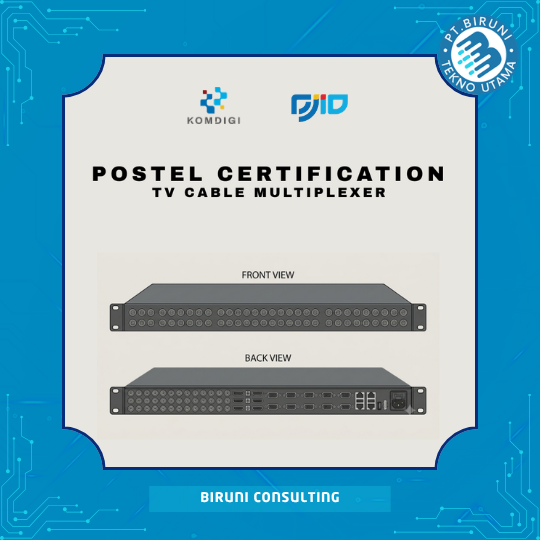
Complete to TV Cable Multiplexer Postel Certification in Indonesia
A TV Cable Multiplexer is a telecommunications device used in cable television systems to combine multiple audio, video, and data streams into a single transmission channel. It plays a critical role in cable television infrastructure by enabling efficient distribution of numerous television channels through a shared transmission network to subscribers.
With the continuous development of digital broadcasting and broadband communication technologies, TV Cable Multiplexers are widely deployed in Digital TV, IPTV, Hybrid Fiber Coaxial (HFC), and cable television operator networks. Since these devices are connected to telecommunications infrastructure and perform communication functions, they may require DJID (formerly Postel/SDPPI) Certification before they can be legally imported, distributed, or marketed in Indonesia.
Understanding applicable certification requirements early helps manufacturers, importers, distributors, and network operators accelerate regulatory approval while ensuring compliance with Indonesian telecommunications regulations.
What Is a TV Cable Multiplexer?
A TV Cable Multiplexer is a network device that combines multiple television broadcast streams into a single transport stream or transmission channel for efficient distribution across cable television infrastructure.
These devices are commonly installed within cable television headend facilities, IPTV systems, digital broadcasting networks, and HFC infrastructure. Depending on the system architecture, a multiplexer may support Ethernet networking, IP communication, MPEG Transport Streams, DVB standards, and other telecommunications interfaces.
By consolidating multiple program channels into a unified transmission system, TV Cable Multiplexers improve bandwidth utilization and simplify broadcast distribution.
Does a TV Cable Multiplexer Require DJID (Postel) Certification?
Whether a TV Cable Multiplexer requires DJID certification depends on its communication functions, networking interfaces, transmission capabilities, and applicable Indonesian telecommunications regulations.
Products incorporating telecommunications interfaces or communication technologies regulated by DJID generally require certification before commercial distribution in Indonesia.
Regulatory evaluation typically considers technical specifications, communication functions, network interfaces, electromagnetic compatibility, and other applicable technical requirements.
Early regulatory assessment enables companies to determine the appropriate certification pathway and required documentation.
TV Cable Multiplexer Certification Requirements
Companies applying for certification generally prepare technical and administrative documentation, including:
- Company legal documents.
- Business Identification Number (NIB).
- Technical product specifications.
- User Manual.
- Product Datasheet.
- Product Label.
- Product Photographs.
- System architecture and block diagrams.
- Accredited laboratory test reports where applicable.
- Additional supporting documents required by DJID regulations.
Complete documentation helps accelerate the certification process and minimizes unnecessary revisions.
TV Cable Multiplexer Certification Process
The certification process begins with identifying the product category and determining applicable Indonesian telecommunications regulations.
Technical documentation is reviewed before laboratory testing is conducted where required. Testing may include communication performance, Electromagnetic Compatibility (EMC), Electrical Safety, and other technical evaluations depending on the equipment’s characteristics.
Following successful technical assessment and administrative review, DJID issues the certification authorizing legal commercialization of the product in Indonesia.
Certification timelines vary depending on product complexity, laboratory testing requirements, and documentation completeness.
Benefits of TV Cable Multiplexer Certification
Obtaining DJID certification provides important advantages for manufacturers, distributors, and network operators.
Key benefits include:
- Compliance with Indonesian telecommunications regulations.
- Support for product importation and commercial distribution.
- Verification of technical conformity.
- Increased confidence among customers and network operators.
- Reduced regulatory risks.
- Improved market competitiveness in Indonesia.
Regulatory compliance also demonstrates commitment to product quality, network reliability, and legal market entry.
Products Commonly Using TV Cable Multiplexer Technology
TV Cable Multiplexers are commonly deployed in:
- Digital TV Headend Systems.
- IPTV Headend Platforms.
- CATV Multiplexers.
- MPEG Transport Stream Multiplexers.
- DVB Multiplexers.
- Hybrid Fiber Coaxial (HFC) Networks.
- Digital Broadcasting Systems.
- Video Distribution Networks.
- Cable Television Infrastructure.
- Other digital broadcast distribution equipment.
Certification requirements depend on each product’s communication capabilities and applicable Indonesian technical regulations.
Contact Us
Biruni Consulting provides professional consulting services for DJID (Postel) certification of TV Cable Multiplexers and other telecommunications equipment in Indonesia.
We assist companies with:
- Regulatory analysis for TV Cable Multiplexer products.
- Identification of applicable DJID certification requirements.
- Preparation of technical and administrative documentation.
- Coordination with accredited testing laboratories.
- End-to-end certification support until approval is granted.
With extensive experience in Indonesian telecommunications certification, we help manufacturers, importers, distributors, and network operators obtain certification efficiently while ensuring full regulatory compliance.
Contact us today for professional consultation regarding TV Cable Multiplexer Postel certification and telecommunications equipment approval requirements in Indonesia.