
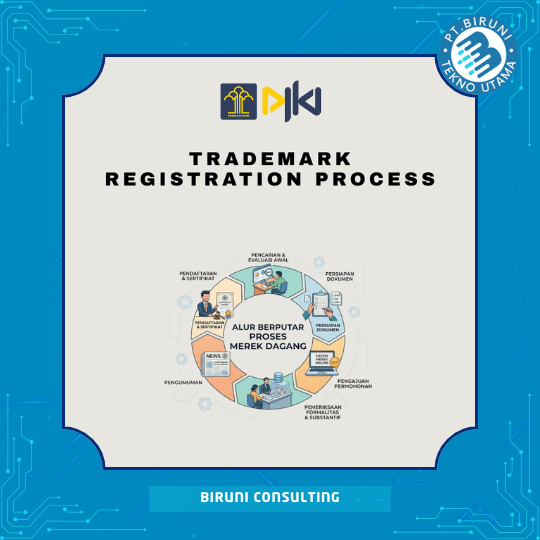
Complete Guide to Trademark Registration Steps Based on DJKI Regulations to Protect Your Business Identity
A trademark is an essential identity for a business, product, or service. Registering a trademark officially provides legal protection for the name, logo, or symbol used in commercial activities.
In Indonesia, trademark registration is regulated under Law Number 20 of 2016 concerning Trademarks and Geographical Indications. The registration process is handled by the Directorate General of Intellectual Property (DJKI) under the Ministry of Law and Human Rights.
Understanding the trademark registration process helps business owners avoid legal disputes and ensures that their brand identity is protected.
Legal Basis for Trademark Registration in Indonesia
Several regulations govern trademark registration in Indonesia, including:
- Law Number 20 of 2016 on Trademarks and Geographical Indications
- Government Regulation Number 90 of 2019 concerning Non-Tax State Revenue
- Ministerial regulations on trademark registration procedures
These regulations regulate the registration stages, examination process, and issuance of trademark certificates.
Stages of the Trademark Registration Process
Trademark registration in Indonesia goes through several official stages.
1. Trademark Search
Before submitting an application, applicants are strongly advised to conduct a trademark search.
This step helps to:
- Avoid rejection from DJKI
- Prevent trademark disputes
- Ensure the mark has distinctive elements
2. Filing a Trademark Application
Applications are submitted online through the DJKI system by completing the required documents, such as:
a. Applicant data (individual or company)
b. Trademark label or logo
c. Trademark class according to the Nice Classification
d. Statement of trademark ownership
e. Proof of payment
Once completed, the application will be officially recorded.
3. Formality Examination
DJKI will examine the administrative completeness of the application.
This examination includes:
- Applicant data verification
- Trademark label clarity
- Trademark class suitability
- Payment confirmation
If all requirements are fulfilled, the application proceeds to the next stage.
4. Trademark Publication
The trademark will be published in the Official Trademark Gazette for approximately 2 months.
During this period, third parties may submit objections if they believe the mark conflicts with their registered trademark.
5. Substantive Examination
After the publication period, DJKI conducts a substantive examination.
The examination evaluates:
- Similarity with registered trademarks
- Misleading elements
- Prohibited symbols
- Compliance with trademark law
This stage determines whether the trademark will be approved or rejected.
6. Issuance of Trademark Certificate
If the application passes the examination, DJKI will issue a Trademark Certificate.
Trademark protection lasts for 10 years from the filing date and can be renewed for the same period.
Trademark owners gain exclusive rights to:
- Use the trademark commercially
- License it to other parties
- Take legal action against infringement
Contact Biruni Consulting
Handling the trademark registration process requires a proper understanding of regulations, trademark classification, and administrative procedures.
Biruni Consulting provides professional consultation and services to assist businesses in managing the trademark registration process in accordance with Indonesian regulations. Our team helps from trademark search, document preparation, application submission, and monitoring the registration process.
Contact Biruni Consulting today to get professional consultation and trademark registration services for your business.