
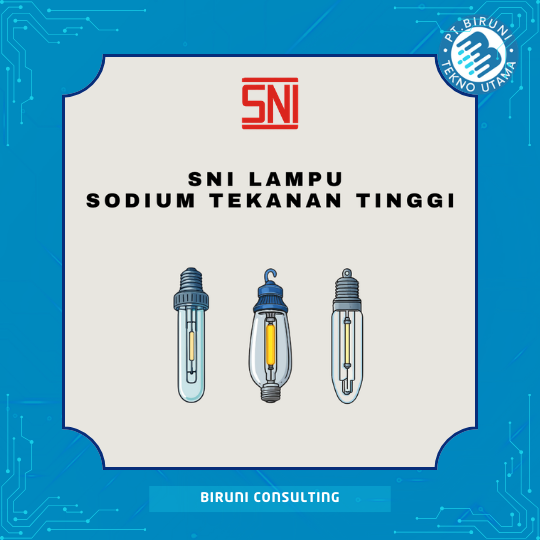
Indonesian National Standard for Safety, Performance Reliability, and Legal Distribution of High Pressure Sodium Lighting Products
High Pressure Sodium (HPS) lamps are a type of gas discharge lighting technology widely used for outdoor illumination and large-scale industrial lighting applications. These lamps are recognized for their distinctive golden-yellow light output, high luminous efficiency, and long operational lifespan compared to many conventional lighting technologies.
In Indonesia, High Pressure Sodium lamps are commonly installed in street lighting systems, industrial facilities, ports, airports, stadiums, warehouses, and various public infrastructure projects. Their ability to produce powerful illumination over large areas makes them particularly suitable for environments where reliability and energy efficiency are essential.
Because these lamps operate using high-pressure gas discharge technology, they involve complex electrical processes and specialized components such as ignitors and ballasts. Improperly manufactured products may pose risks such as electrical failure, overheating, arc instability, or even lamp rupture. For this reason, High Pressure Sodium lighting products distributed in Indonesia must comply with the Indonesian National Standard (SNI).
SNI certification ensures that lighting products meet specific safety, quality, and performance requirements before entering the Indonesian market. This certification process helps guarantee that lighting systems installed in public and industrial environments operate safely and efficiently.
Importance of SNI Certification for High Pressure Sodium Lamps
The Indonesian National Standard (SNI) is the official national standard established by Badan Standardisasi Nasional. The purpose of SNI is to ensure that products distributed in Indonesia meet defined safety, quality, and performance benchmarks.
Lighting equipment, including High Pressure Sodium lamps, falls under the category of electrical products that require strict safety compliance. Because these lamps operate under high internal pressure and utilize electrical discharge technology, adherence to national safety standards is crucial.
Technical regulations related to the implementation of SNI for electrical and lighting products are typically issued by Kementerian Perindustrian Republik Indonesia. Market supervision and product circulation control are conducted by Kementerian Perdagangan Republik Indonesia to ensure that only compliant products are sold and used in Indonesia.
Mandatory SNI certification helps achieve several key objectives:
-
Protecting users from electrical hazards and equipment failure
-
Ensuring consistent lighting performance and operational reliability
-
Supporting national energy efficiency policies
-
Preventing low-quality or unsafe lighting products from entering the market
-
Maintaining fair competition among manufacturers and importers
Through these regulations, the Indonesian government aims to maintain a safe and reliable lighting infrastructure nationwide.
Technical Testing Requirements for High Pressure Sodium Lamps
To obtain SNI certification, High Pressure Sodium lamps must undergo detailed laboratory testing performed by accredited testing facilities. These tests evaluate both safety and functional performance characteristics of the lamp.
Key technical testing parameters generally include:
-
Electrical insulation testing to prevent electric shock
-
Dielectric strength verification for internal circuitry
-
Temperature rise evaluation to assess heat resistance
-
Voltage and current stability testing
-
Measurement of luminous flux and light output efficiency
-
Lamp ignition and operational stability testing
-
Lifetime endurance testing under continuous operation
-
Mechanical strength and structural durability assessment
-
Verification of labeling and product marking compliance
These tests ensure that High Pressure Sodium lamps maintain safe operation and consistent illumination performance throughout their expected service life.
SNI Certification Procedure for High Pressure Sodium Lamps
Manufacturers or importers must complete several regulatory steps in order to obtain SNI certification.
Administrative Documentation Preparation
The certification process begins with the preparation of required administrative and technical documents, including:
-
Business Identification Number (NIB)
-
Legal company registration documents
-
Product technical specifications
-
Electrical design or circuit documentation
-
Product user manual and safety instructions
-
Packaging and labeling design
These documents are submitted to an authorized product certification body for review.
Laboratory Testing of Product Samples
Representative samples of the High Pressure Sodium lamp must be submitted to an accredited laboratory. During testing, the product’s electrical safety, illumination performance, durability, and operational stability are carefully evaluated.
Only products that meet all technical requirements can proceed to certification approval.
Manufacturing Quality System Audit
Depending on the certification scheme applied, auditors may conduct an inspection of the manufacturing facility to verify that production processes follow consistent quality control standards.
This ensures that all products produced will maintain the same quality level as the tested samples.
Issuance of SPPT SNI Certificate
Once all certification stages are successfully completed, the Product Certification Body will issue the SPPT SNI certificate. This certificate grants legal authorization for manufacturers or importers to apply the SNI mark to their products and distribute them within Indonesia.
Risks of Distributing Non-Certified HPS Lamps
Selling or distributing lighting products without mandatory SNI certification may lead to serious consequences.
These risks may include:
-
Import rejection by Indonesian customs authorities
-
Product confiscation during market surveillance inspections
-
Administrative sanctions or financial penalties
-
Mandatory product recall from the market
-
Damage to company reputation and market trust
Therefore, compliance with SNI requirements is essential for companies intending to operate in the Indonesian lighting market.
Benefits of SNI Certification for Lighting Businesses
SNI certification offers numerous advantages for manufacturers and importers.
These benefits include:
-
Legal authorization to distribute products across Indonesia
-
Increased credibility with distributors, contractors, and government projects
-
Stronger brand reputation and market trust
-
Assurance of product safety and quality for end users
-
Improved competitiveness in the lighting industry
Obtaining SNI certification demonstrates a company’s commitment to quality assurance and regulatory compliance.
Conclusion
SNI certification for High Pressure Sodium Lamps is a critical regulatory requirement that ensures lighting products meet Indonesia’s safety, performance, and quality standards. Through a structured certification process involving documentation review, laboratory testing, and manufacturing audits, only qualified products are permitted to carry the SNI mark and enter the Indonesian market.
Biruni Consulting provides professional consulting services to support companies in obtaining SNI certification for High Pressure Sodium lighting products. Our team assists with regulatory consultation, technical document preparation, laboratory coordination, and certification management. With extensive experience in Indonesian product compliance, Biruni Consulting is ready to help manufacturers and importers navigate the certification process efficiently and ensure their products meet all regulatory requirements.