
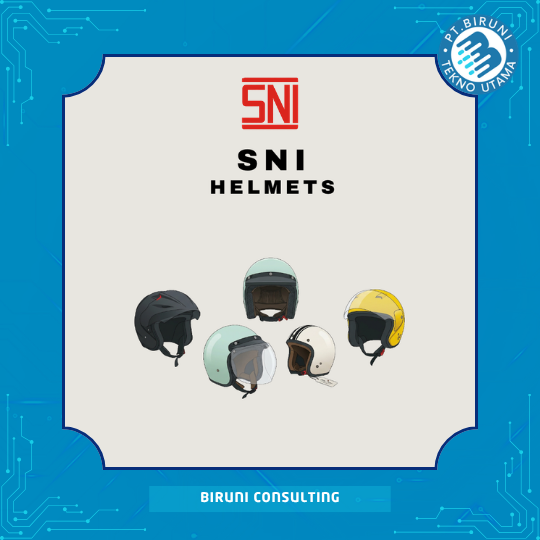
SNI for Helmets in Indonesia
Helmets are essential personal protective equipment designed to reduce the risk of head injuries caused by impacts during motorcycle riding and other activities requiring head protection. In Indonesia, helmets are not only an important safety device but are also subject to regulatory requirements that require certain helmets to comply with the Indonesian National Standard (SNI). Compliance with SNI helps ensure that helmets available in the market have been evaluated for safety, quality, and performance before reaching consumers.
The Indonesian National Standard for helmets establishes technical requirements related to impact protection, structural strength, material quality, retention systems, and overall product performance. Through the SNI certification process, manufacturers and importers demonstrate that their helmets comply with the applicable Indonesian safety standards and are suitable for legal distribution within the country.
In addition to supporting consumer safety, SNI certification increases product credibility and market competitiveness. Certified helmets are generally more trusted by consumers, accepted by distributors and retailers, and compliant with Indonesian regulatory requirements for commercial distribution.
Types of Helmets Covered by SNI
Helmets are available in various designs to suit different riding conditions and user preferences. Depending on the applicable regulations and certification scope, these products may require compliance with the relevant Indonesian National Standard.
Common helmet categories include:
1 Full-face helmets.
2 Open-face helmets.
3 Modular or flip-up helmets.
4 Half-face helmets.
5 Off-road or motocross helmets.
6 Dual-sport helmets.
7 Touring helmets.
8 Children’s helmets.
Each helmet type features different design characteristics, shell construction, visor configuration, and retention systems, resulting in certification requirements that may vary depending on the product category.
Why Is SNI Certification for Helmets Important?
SNI certification helps ensure that helmets provide reliable protection during accidents by meeting established safety requirements. Certified helmets undergo laboratory evaluation to verify their ability to absorb impact energy, maintain structural integrity, and provide adequate protection under specified testing conditions.
The certification process also evaluates material quality, chin strap strength, retention system performance, field of vision, and overall product construction. These requirements help ensure that certified helmets provide consistent performance throughout their intended service life.
For manufacturers and importers, SNI certification demonstrates commitment to product quality, improves customer confidence, strengthens brand reputation, and supports compliance with Indonesian regulations.
How to Obtain SNI Certification for Helmets
Product Identification
The certification process begins by identifying the helmet category, technical specifications, materials, dimensions, and product characteristics.
Document Preparation
Typical certification documents include:
1 Business registration documents.
2 Technical product specifications.
3 Product datasheets.
4 Product labels and packaging information.
5 Engineering drawings where applicable.
6 Additional supporting documents required under the certification scheme.
Complete documentation helps streamline the certification review process.
Certification Application
Applications are submitted to a Product Certification Body (LSPro) accredited by Komite Akreditasi Nasional for the applicable certification scope.
Laboratory Testing
Helmet products undergo comprehensive laboratory testing according to the applicable Indonesian standards.
Testing may include:
1 Impact absorption testing.
2 Retention system strength testing.
3 Penetration resistance testing.
4 Chin strap strength evaluation.
5 Field of vision assessment.
6 Material and construction evaluation.
7 Environmental durability testing.
The testing program varies depending on the helmet type and certification requirements.
SPPT SNI Issuance
After successfully completing all certification stages and demonstrating compliance with the applicable standards, the Product Certification Body issues the Certificate of Authorization for the Use of the SNI Mark (SPPT SNI). This certificate confirms that the helmet complies with the Indonesian National Standard and may be legally marketed in Indonesia.
Common Certification Challenges
Manufacturers and importers may encounter several challenges during certification, including incomplete technical documentation, material specifications that do not satisfy applicable requirements, impact test failures, or product design modifications required to achieve compliance.
Preparing comprehensive documentation and reviewing product specifications before laboratory testing can significantly improve certification efficiency and reduce unnecessary delays.
Contact Us
Biruni Consulting helps companies in the SNI certification process for helmets professionally and in accordance with applicable regulations in Indonesia
Our services include
1 Consultation on SNI regulations for helmets
2 Identification of applicable standards
3 Certification document preparation
4 Laboratory testing assistance
5 Certification processing until SPPT SNI issuance
With extensive experience in product certification in Indonesia Biruni Consulting helps ensure helmet products comply with applicable safety, quality, and performance requirements and are ready for legal distribution in Indonesia
Contact Us for helmet SNI certification services, consultation, and SPPT SNI processing