
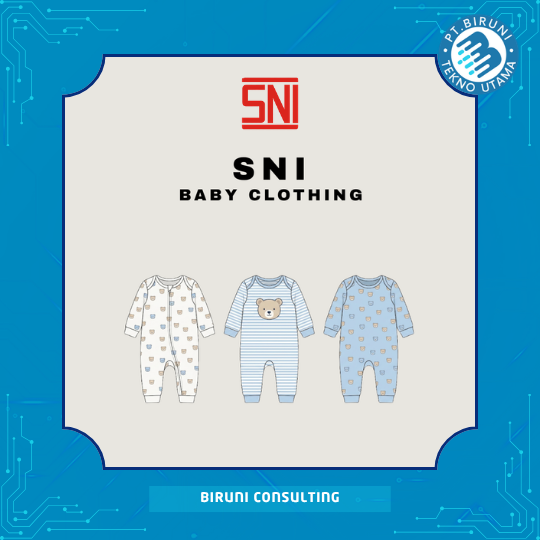
Guide to SNI Certification for Baby Clothing in Indonesia
Baby clothing is a textile product that comes into direct contact with a baby’s skin, making the safety of materials, construction, and comfort important considerations. Products such as baby shirts, baby trousers, baby sets, sleepwear, rompers, bodysuits, and other baby garments should be manufactured with consideration for the characteristics of their intended users, whose skin is generally more sensitive than that of adults.
In Indonesia, standard requirements for textile products may differ depending on the product type, materials, function, and characteristics. Therefore, businesses that manufacture or import baby clothing should first determine whether their products fall into a category subject to mandatory SNI requirements or other applicable technical standards.
Compliance with applicable standards can help ensure that baby clothing products have appropriate quality and characteristics. For manufacturers, importers, and brand owners, reviewing SNI requirements before marketing is also important so that production, procurement, labeling, and distribution can be carried out according to applicable requirements.
What Is SNI for Baby Clothing?
SNI for baby clothing refers to standards or technical requirements relating to the characteristics of clothing products intended for babies. The applicable requirements must be determined according to the product type, textile materials, design, and regulations in force when the product is marketed.
Baby clothing may be manufactured using various materials, including cotton, polyester, rayon, or blended fibers. Differences in material composition can affect the applicable technical requirements and testing methods. Therefore, product identification is an important initial step before determining whether certification or specific testing is required.
In addition to the main textile material, components such as buttons, zippers, cords, labels, decorative elements, and other accessories should also be considered. The construction of the garment should be designed so that it does not create unnecessary risks for babies when the product is used for its intended purpose.
Types of Baby Clothing
Baby clothing is available in various designs and functions. Common products include:
- Baby shirts.
- Baby trousers.
- Baby clothing sets.
- Baby sleepwear.
- Baby rompers.
- Baby bodysuits.
- Long-sleeve baby clothing.
- Short-sleeve baby clothing.
Each product may have different material compositions, designs, and construction. Therefore, applicable requirements should be determined according to the actual characteristics of the product.
Why Are Baby Clothing Standards Important?
Baby clothing comes into direct contact with the skin and is worn during daily activities. Materials and construction that do not meet applicable requirements may cause discomfort or create certain risks for users. Therefore, the quality of textile materials, stitching, accessories, and garment construction should be carefully considered.
Product testing may be conducted to evaluate specific characteristics according to the applicable standards. Testing may relate to material composition, physical textile properties, color fastness, accessory safety, or other characteristics determined according to the type of baby clothing.
For businesses, compliance with applicable standards can also increase consumer confidence. Products supported by appropriate documentation and test results provide distributors and consumers with clearer information regarding product quality and characteristics.
How to Obtain SNI Certification for Baby Clothing
Product Identification
The first step is to identify the baby clothing product to be marketed. Relevant information includes garment type, intended age group, fiber composition, design, size, accessories, and intended use.
This identification is necessary to determine whether the product falls into a category subject to mandatory SNI requirements or other technical requirements.
Document Preparation
Required documents may vary according to the certification scheme and product type. In general, documentation may include:
- Business registration and legal company documents.
- Product specifications.
- Material composition.
- Product datasheets or technical information.
- Product drawings or designs.
- Label and packaging information.
- Manufacturing process documents where required.
- Additional supporting documents according to applicable requirements.
Certification Application
If the product falls into a category requiring certification, the application is submitted through a Product Certification Body (LSPro) with an appropriate scope for the product.
The LSPro evaluates the submitted documents and determines the conformity assessment stages according to the applicable standard and certification scheme.
Laboratory Testing
Baby clothing samples may undergo laboratory testing according to the applicable standards.
Testing may cover textile material characteristics and other product requirements according to the applicable baby clothing category. Testing methods are not necessarily identical for every product because they depend on the materials, construction, and standards being applied.
Evaluation and Certification
After all documentation, test results, and conformity assessment stages have been completed, the LSPro conducts a final evaluation. If the product is determined to comply with applicable requirements, the relevant certificate may be issued according to the applicable certification scheme.
What Should Be Considered Before Applying for SNI Certification for Baby Clothing?
Before applying for certification, companies should ensure that product identity, brand, material composition, design, and labeling information are consistent. Differences between samples, documents, and marketed products can make the evaluation process more complicated.
Companies should also ensure that all materials and components used are consistent with the stated product specifications. For imported products, information regarding the manufacturer, country of origin, brand, and supporting documentation should be prepared from the beginning so that the conformity assessment process can be conducted efficiently.
It is also important to review the latest applicable regulations because mandatory SNI requirements may change depending on government policies and product categories. By conducting an early regulatory assessment, companies can determine whether their baby clothing products require SNI certification, specific testing, or other requirements before being marketed.
Contact Us
Biruni Consulting helps companies with consultation and SNI certification processes for baby clothing and various other textile products in Indonesia.
Our services include
- Consultation on SNI requirements for baby clothing.
- Identification of applicable standards and regulations.
- Assessment of product certification requirements.
- Certification document preparation.
- Laboratory testing assistance.
- Certification processing according to the applicable scheme.
With experience in product certification and regulatory compliance in Indonesia, Biruni Consulting helps companies understand the requirements that need to be fulfilled before baby clothing products are marketed.
Contact Us for baby clothing SNI certification services, product requirement assessments, and certification process assistance.