
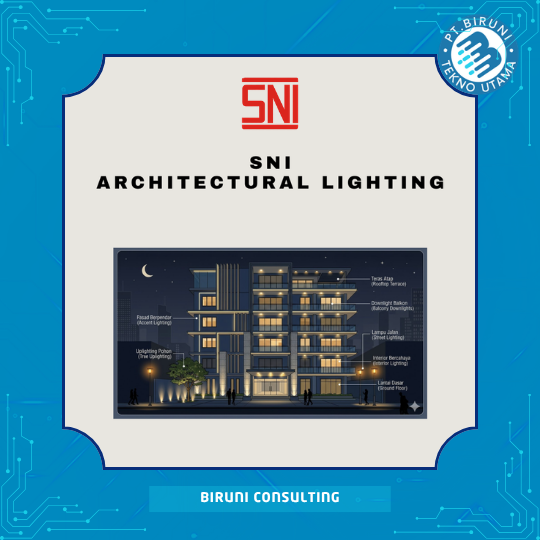
Importance of SNI Certification for Architectural Lighting
Architectural lighting is used to enhance, highlight, and define design elements of buildings, both indoors and outdoors. It is commonly installed in office buildings, hotels, shopping centers, museums, and luxury residences. Its primary function is not only illumination but also adding aesthetic value and emphasizing building character.
Architectural lighting can include spotlights, downlights, strip lights, wall washers, and decorative lights. Many use LED technology for energy efficiency and long lifespan. However, these lighting products remain electrical devices that require strict safety standards, particularly when installed in public or high-traffic areas.
Non-compliant architectural lighting poses risks such as fire, electrical faults, or equipment damage. Poor-quality lighting can also compromise the visual impact of building design. Compliance with SNI ensures architectural lighting is safe, reliable, and legally usable.
Definition of SNI and Regulatory Authorities
The Indonesian National Standard (SNI) is established by Badan Standardisasi Nasional to guarantee product quality, safety, and performance.
The technical supervision of lighting products is regulated by Kementerian Perindustrian Republik Indonesia, while market distribution is monitored by Kementerian Perdagangan Republik Indonesia.
Compliance ensures all architectural lighting meets national safety and performance requirements.
Types of Architectural Lighting
1. Spot Light / Accent Light
Lights designed to highlight specific areas or architectural features.
2. Downlight
Provides vertical illumination for interior spaces.
3. Wall Washer
Evenly illuminates wall surfaces for visual effects.
4. Strip Light / Linear Light
Long-format lighting used for accents or design highlights.
5. Landscape & Exterior Lighting
Outdoor lighting designed for durability, weather, and water resistance.
SNI Certification Process for Architectural Lighting
Documentation Preparation
Includes business registration, technical specifications, datasheets, manuals, technical drawings, and labeling.
Laboratory Testing
Testing includes electrical safety, heat and weather resistance, energy efficiency, light quality, durability, and material evaluation.
Factory Audit
Ensures consistent production quality.
SPPT SNI Issuance
After passing all requirements, SPPT SNI is issued for legal marketing and use.
Conclusion
SNI certification ensures architectural lighting is safe, high-quality, and aesthetically effective. It guarantees longevity, performance, and compliance with Indonesian regulations.
Biruni Consulting provides full-service SNI certification assistance for architectural lighting, including consultation, documentation, laboratory testing, and certification management. We ensure your project complies with national standards and is ready for the Indonesian market.