
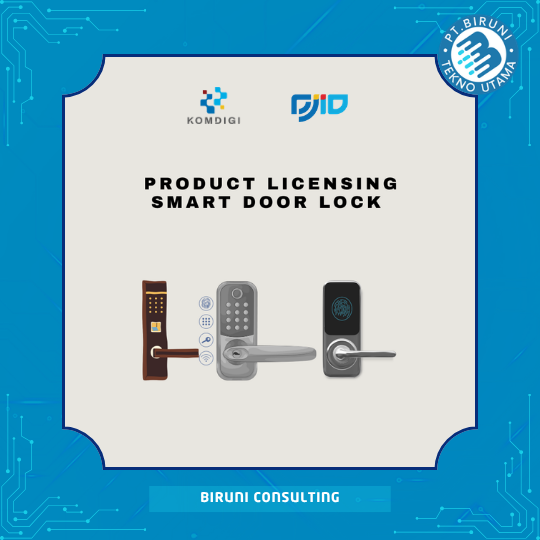
Complete Guide to Smart Door Lock Product Licensing and Compliance
A smart door lock is an electronic locking system that uses digital technology to control access to a building or room. Unlike conventional locks, smart door locks can be operated using PIN codes, RFID cards, fingerprint recognition, mobile applications, or internet connectivity.
These devices are increasingly used in various environments, including:
- Residential homes
- Apartments
- Office buildings
- Hotels
- Commercial properties
Since smart door locks are electronic devices that often use wireless communication technology, they must comply with several Indonesian regulations before being distributed in the market.
Regulations Governing Smart Door Lock Products in Indonesia
Smart door locks are categorized as telecommunication and electronic devices that must comply with Indonesian regulatory standards.
Relevant regulations include:
- Regulation of the Ministry of Communication and Informatics (Kominfo) regarding Telecommunication Device Certification
- Law No. 36 of 1999 concerning Telecommunications
- Regulations on market surveillance issued by the Ministry of Trade
- K3L (Occupational Safety, Health, and Environmental) compliance requirements
In certain cases, smart door lock products may also require additional certification such as SNI for specific components and electrical safety testing.
Types of Certification Required for Smart Door Lock Products
To be legally distributed in Indonesia, smart door lock products may require the following approvals:
1. SDPPI / Postel Certification
This certification is required if the smart door lock uses wireless communication technologies such as:
a. WiFi
b. Bluetooth
c. Zigbee
d. RF modules
Certification is issued by the Directorate General of Resources and Equipment of Post and Information Technology (SDPPI).
2. Laboratory Testing
Before certification approval, the device must undergo technical testing at accredited laboratories to verify compliance with Indonesian technical standards.
3. K3L Compliance
Electronic devices must comply with safety, occupational health, and environmental requirements to ensure safe operation and environmental responsibility.
4. Product Registration
In certain situations, importers or distributors must also register products before distributing them in Indonesia according to trade regulations.
Smart Door Lock Certification Process
The licensing process typically includes the following steps:
- Identification of product technical specifications
- Preparation of required documentation including:
a. Technical specification sheet
b. Wireless module datasheet
c. User manual
d. Product photos and labeling information - Laboratory testing to verify technical compliance
- Certification submission through the SDPPI certification system
- Issuance of the telecommunication device certificate
Once approved, the product can be legally distributed in the Indonesian market.
Importance of Smart Door Lock Certification
Obtaining proper certification provides several benefits, including:
- Ensuring legal distribution in Indonesia
- Avoiding product withdrawal risks
- Increasing consumer trust and credibility
- Complying with government regulations for electronic devices
Companies that distribute uncertified devices may face regulatory penalties under Indonesian law.
Contact Biruni Consulting
Biruni Consulting is a professional consulting firm that assists companies with smart door lock product certification and regulatory compliance in Indonesia.
Our services include:
- Product certification requirement analysis
- Technical documentation preparation
- Laboratory testing assistance
- SDPPI / Postel certification processing
- Regulatory compliance consulting for electronic devices
With extensive experience in telecommunication and electronic product certification, Biruni Consulting helps ensure that your smart door lock products comply with Indonesian regulatory requirements before entering the market.