
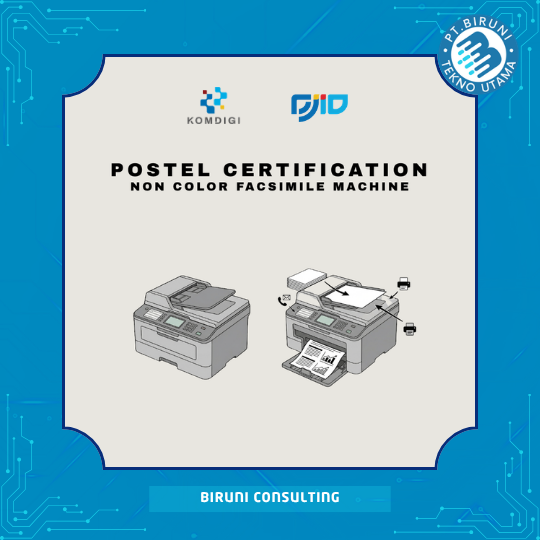
Postel Certification for Non-Color Facsimile Machine and SDPPI Compliance in Indonesia
Non-color facsimile machines are communication devices used to send and receive black-and-white documents through telecommunication networks. Although digital communication systems are widely used today, fax machines are still required in government offices, legal institutions, and organizations that rely on formal document transmission.
These devices generally operate through traditional telephone lines, but modern versions may also support LAN connections or IP-based communication systems. This makes them part of telecommunication equipment that operates within regulated communication networks.
Therefore, non-color facsimile machines must comply with Postel (SDPPI) certification requirements before they can be legally imported and distributed in Indonesia.
What Is a Non-Color Facsimile Machine in Regulatory Context
A non-color facsimile machine is a device used to transmit black-and-white documents over telecommunication networks such as telephone lines or internet-based systems.
Although its function is relatively simple, it is still classified as a telecommunication device because it relies on data transmission systems between devices.
As a result, it must comply with SDPPI technical regulations before being marketed in Indonesia.
Is Postel Certification Required
Postel certification is required for non-color facsimile machines that include features such as:
- LAN or internet connectivity
- Network-based communication systems
- Digital data transmission functions
These features must be tested to ensure compliance with national frequency regulations and technical standards.
Regulations in Indonesia for Telecommunication Devices
Telecommunication regulations in Indonesia are managed by SDPPI under the Ministry of Communication and Digital Affairs. The main purpose is to ensure all communication devices meet national safety, technical, and compatibility standards.
These regulations also protect national communication infrastructure from interference and ensure compliance with internationally recognized standards adopted in Indonesia.
Certification Requirements
Companies must prepare both administrative and technical documents, including:
- Business legality documents such as NIB and OSS
- Technical specifications of the device
- Product user manual
- Communication module or system datasheet
- Product labeling information
- Accredited laboratory test reports
Certification Process Overview
The certification process involves several stages, including product identification, document review, and laboratory testing.
Testing covers radio frequency emissions, electromagnetic compatibility, and device safety. Once all requirements are fulfilled, the Postel certificate is issued as official approval for market distribution.
Common Challenges in Certification Process
Common challenges include incomplete documentation, differences between international and local standards, and varying processing times depending on product complexity.
Limited understanding of regulatory requirements may also slow down the certification process, making proper preparation essential.
Contact Us
Biruni Consulting provides professional services for Postel/SDPPI certification for non-color facsimile machines with connectivity features such as LAN and internet-based communication.
We assist companies with:
- Telecommunication regulatory analysis
- Device classification under SDPPI requirements
- Technical and administrative document preparation
- Coordination of accredited laboratory testing
- End-to-end support until certification is issued
With experience in electronic and telecommunication regulations, we help ensure the certification process is efficient, accurate, and fully compliant with applicable requirements.
Contact us for Postel certification consultation so your products can be legally marketed in Indonesia