
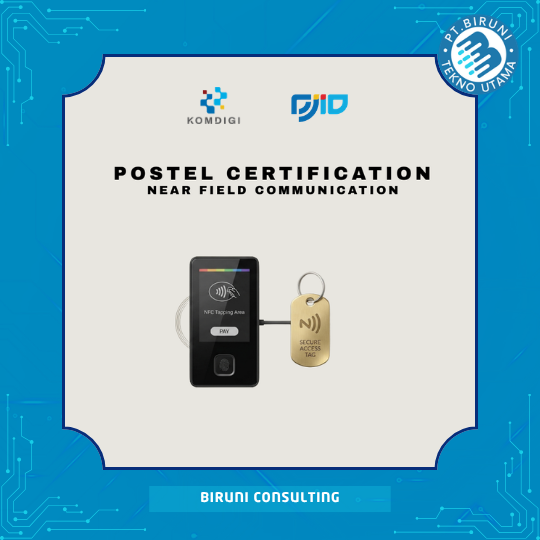
Guide to NFC Postel Certification in Indonesia
Near Field Communication (NFC) is a short-range wireless communication technology that enables two compatible devices to exchange information simply by bringing them close together. NFC has become a standard feature in modern smartphones, smartwatches, payment terminals, access control systems, smart locks, IoT devices, electronic ticketing systems, and many other connected products.
In Indonesia, products incorporating NFC technology may be subject to telecommunications regulations because they utilize radio frequency communication. Manufacturers, importers, and distributors should determine whether their products require DJID (formerly Postel/SDPPI) certification before they can be legally imported, marketed, or distributed within Indonesia.
Understanding certification requirements during product development or prior to importation helps companies avoid regulatory issues, accelerate market entry, and ensure full compliance with Indonesian telecommunications standards.
What Is NFC?
Near Field Communication (NFC) is a wireless communication technology that allows secure data exchange between two compatible devices over very short distances, typically less than 10 centimeters. Developed from High Frequency (HF) RFID technology, NFC supports two-way communication and offers a convenient solution for secure identification and contactless interaction.
NFC is widely used for mobile payments, electronic ticketing, access control systems, Bluetooth pairing, smart home automation, identity verification, digital business cards, asset management, and numerous Internet of Things (IoT) applications.
Because NFC operates using radio frequency technology, products equipped with NFC modules may require technical evaluation under Indonesian telecommunications regulations.
Does an NFC Device Require DJID (Postel) Certification?
Whether an NFC-enabled product requires DJID certification depends on its communication functions, operating frequency, wireless transmission characteristics, and applicable Indonesian regulatory requirements.
Many modern electronic products combine NFC with WiFi, Bluetooth, Thread, Zigbee, or cellular communication modules. When multiple wireless technologies are integrated into a single product, every communication interface should be evaluated during the certification process.
Conducting regulatory assessment before product registration helps determine the required testing scope and certification pathway.
NFC Certification Requirements
Companies applying for NFC certification generally prepare technical and administrative documentation, including:
- Company legal documents.
- Business Identification Number (NIB).
- Technical specifications.
- User Manual.
- Product Datasheet.
- Product Label.
- Product Photographs.
- Block diagrams and circuit schematics.
- Accredited laboratory test reports where applicable.
- Additional supporting documentation required by DJID regulations.
Proper documentation preparation contributes to a more efficient certification process and minimizes regulatory delays.
NFC Postel Certification Process
The certification process begins by identifying the product category and determining the applicable Indonesian telecommunications regulations.
Technical documentation is reviewed before laboratory testing is performed when required. Depending on product characteristics, testing may include radio frequency performance and other technical evaluations necessary to demonstrate compliance with Indonesian requirements.
After successfully completing the technical assessment and administrative review, DJID issues the certification authorizing legal distribution of the NFC product in Indonesia.
Benefits of NFC Certification
Obtaining DJID certification offers numerous advantages for manufacturers, importers, and distributors introducing NFC-enabled products into the Indonesian market.
Key benefits include:
- Compliance with Indonesian telecommunications regulations.
- Support for importation and commercial distribution.
- Verification of technical compliance.
- Increased customer confidence.
- Reduced regulatory risks.
- Easier market access throughout Indonesia.
Regulatory compliance demonstrates a company’s commitment to product quality, safety, and legal market entry.
Common Products Equipped with NFC
NFC technology is commonly found in a wide variety of electronic products, including:
- Smartphones.
- Smartwatches.
- Tablets.
- Smart Door Locks.
- Payment Terminals (POS).
- Electronic Access Cards.
- Attendance Systems.
- Smart Home Hubs.
- IoT Devices.
- NFC-enabled Printers.
- Bluetooth Speakers with NFC Pairing.
- Wireless Headsets.
- Other consumer and industrial electronic devices supporting NFC communication.
Contact Us
Biruni Consulting provides professional consulting services for DJID (Postel) certification of NFC-enabled products and other telecommunications equipment in Indonesia.
We assist companies with:
- Regulatory analysis for NFC devices.
- Identification of applicable DJID certification requirements.
- Preparation of technical and administrative documentation.
- Coordination with accredited testing laboratories.
- End-to-end certification support until approval is granted.
With extensive experience in Indonesian telecommunications certification, we help manufacturers, importers, and distributors obtain certification efficiently while ensuring full regulatory compliance.
Contact us today for professional consultation regarding NFC Postel certification and telecommunications equipment approval requirements in Indonesia