
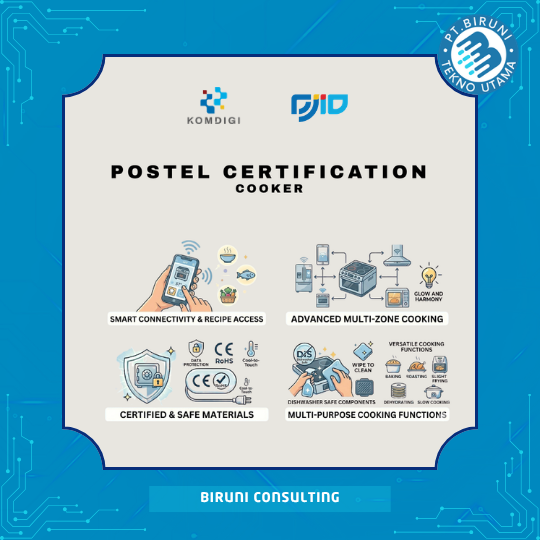
Postel Certification for Cooker and SDPPI Compliance in Indonesia
A cooker is a household electronic appliance designed to prepare various types of food in a practical and efficient manner. These products are available in different forms, including rice cookers, multi cookers, electric pressure cookers, induction cookers, and smart cookers equipped with automated cooking features.
As smart home technology continues to evolve, many modern cookers now include wireless connectivity features such as WiFi, Bluetooth, and mobile application integration. Users can remotely manage cooking schedules, monitor cooking progress, adjust temperature settings, and receive notifications through smartphones without being physically near the appliance.
Because these wireless communication technologies utilize radio frequency signals to transmit and receive data, certain types of cookers fall within the category of devices that require Postel or SDPPI certification before they can be legally imported and distributed in Indonesia.
What Is a Cooker in Regulatory Context
In telecommunications regulations, a cooker falls within the scope of Postel certification when it incorporates wireless communication modules such as WiFi, Bluetooth, or Internet of Things (IoT) technology.
These communication modules allow the appliance to connect to internet networks and mobile applications, enabling users to remotely control and monitor cooking activities. Such features are commonly found in smart rice cookers, smart pressure cookers, smart induction cookers, and other connected kitchen appliances.
If a cooker operates without wireless communication functionality, it is generally not subject to Postel certification. However, products equipped with WiFi, Bluetooth, or other radio communication technologies must comply with SDPPI requirements before entering the Indonesian market.
Is Postel Certification Required
Postel certification is required for cookers that include features such as:
- WiFi connectivity
- Bluetooth connectivity
- Smart home integration
- IoT communication modules
- Remote monitoring through mobile applications
- Remote control via smartphones
These features must undergo testing and certification to ensure compliance with Indonesian technical standards.
Regulations in Indonesia for Telecommunication Devices
Telecommunication device regulations in Indonesia are administered by the Directorate General of Digital Infrastructure (DJID) under the Ministry of Communication and Digital Affairs, formerly known as SDPPI or Postel.
Any device that uses radio frequency communication technology for data transmission must comply with applicable technical requirements before being marketed in Indonesia. These regulations are intended to ensure user safety, frequency compatibility, and protection against interference with other communication systems.
Certification also provides legal certainty for businesses and increases consumer confidence in compliant products.
Certification Requirements
Companies are generally required to prepare several important documents, including:
- Business legality documents such as NIB and OSS
- Product technical specifications
- User manual
- WiFi or Bluetooth module datasheet
- Product labeling information
- Product photographs
- Accredited laboratory test reports
These documents are reviewed during the technical and administrative evaluation process.
Certification Process Overview
The certification process typically begins with product identification to determine the applicable regulatory scope and testing requirements. Technical and administrative documentation is then reviewed as part of the initial assessment.
Laboratory testing is conducted on the wireless communication modules integrated into the product. Testing may include radio frequency (RF), electromagnetic compatibility (EMC), transmit power, receiver performance, and other technical parameters depending on the product characteristics.
Once all requirements have been fulfilled and the product successfully passes evaluation, the Postel certificate is issued as official authorization for legal distribution in Indonesia.
Common Challenges in Certification Process
Common challenges include incomplete technical documentation, specification inconsistencies, regulatory changes, and communication modules that lack sufficient supporting technical information.
Differences between international standards and Indonesian regulations may also affect the certification process. Therefore, understanding regulatory requirements from the beginning can help streamline product approval.
Contact Us
Biruni Consulting provides professional services for Postel/SDPPI certification of cookers equipped with WiFi, Bluetooth, smart home, and IoT technologies.
We assist companies with:
- Telecommunication regulatory analysis
- Device classification under SDPPI requirements
- Technical and administrative document preparation
- Coordination of accredited laboratory testing
- End-to-end certification assistance until approval is issued
With experience in electronic and telecommunication regulations, we help companies complete certification requirements efficiently and in accordance with applicable regulations.
Contact us for Postel certification consultation so your cooker products can be legally marketed in Indonesia.