
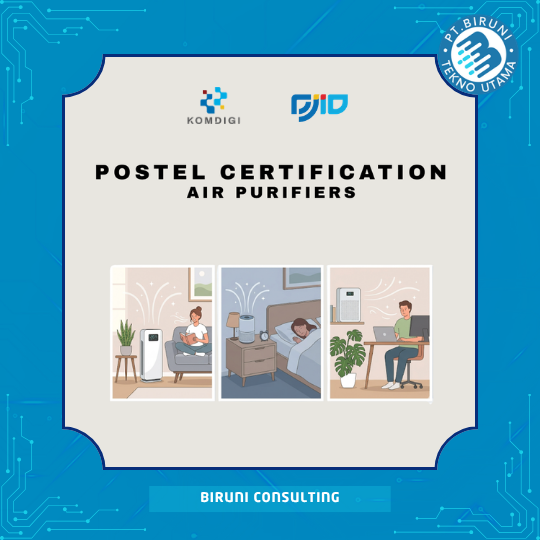
Air purifiers have become increasingly popular in homes, offices, healthcare facilities, and commercial environments. Modern products are no longer limited to air filtration functions. Many models now include advanced connectivity features such as WiFi control, Bluetooth communication, smartphone applications, and smart home integration.
Because of these wireless communication capabilities, many importers, distributors, and manufacturers ask whether air purifiers require Postel or SDPPI certification before being imported or sold.
In general, standard air purifiers without wireless communication functions do not require Postel certification. However, when an air purifier contains WiFi, Bluetooth, or other radio communication modules, certification is generally required before the product can be legally distributed.
The obligation exists because wireless communication technologies operate using regulated radio frequencies. Products must comply with applicable technical requirements to ensure safe operation and compatibility with national telecommunications regulations.
Types of Air Purifiers That Commonly Require Postel Certification
Not all air purifiers automatically require certification. The requirement usually depends on the wireless communication technologies embedded within the product.
1. WiFi Air Purifiers
Many modern air purifiers allow users to monitor air quality, control operating modes, schedule operation, and receive maintenance notifications through smartphone applications.
Because these products communicate through WiFi modules, Postel certification is generally required before commercialization.
2. Bluetooth Air Purifiers
Some products use Bluetooth connectivity for device setup, pairing, or communication with companion mobile applications.
Although Bluetooth is designed for short-range communication, it remains a wireless radio technology that may trigger certification obligations.
3. Smart Air Purifiers
Smart air purifiers often connect to cloud platforms, automation systems, and smart home ecosystems.
When wireless communication modules are integrated into the device, certification requirements should be evaluated before market entry.
Why Is Postel Certification Important for Air Purifiers?
Certification helps businesses ensure compliance with applicable telecommunication regulations while supporting smoother importation and distribution activities.
1. Supporting Legal Import and Distribution
Wireless-enabled products that lack required certification may encounter import restrictions or distribution challenges.
Obtaining certification helps demonstrate compliance with applicable regulations.
2. Ensuring Wireless Technology Compliance
Technical evaluation helps verify that WiFi and Bluetooth modules operate within approved frequency ranges and meet applicable standards.
3. Building Customer Confidence
Certified products often provide greater confidence to distributors, retailers, and end users.
Regulatory compliance can also strengthen brand credibility and support long-term market growth.
Regulations for Air Purifier Postel Certification
Several telecommunication regulations serve as the foundation for wireless device certification requirements.
1. Undang-Undang Nomor 36 Tahun 1999 tentang Telekomunikasi
Provides the legal framework for telecommunication systems and radio communication equipment.
2. Peraturan Menteri Komunikasi dan Informatika Nomor 16 Tahun 2018 tentang Sertifikasi Alat dan/atau Perangkat Telekomunikasi
Requires telecommunication equipment to obtain certification before commercialization.
3. Peraturan Menteri Komunikasi dan Informatika Nomor 2 Tahun 2023 tentang Penggunaan Spektrum Frekuensi Radio Berdasarkan Izin Kelas
Regulates the use of radio frequency spectrums for wireless technologies such as WiFi and Bluetooth.
Documents Commonly Required for Air Purifier Certification
Companies typically need to prepare technical and administrative documentation before submitting certification applications.
Common requirements include:
- product technical specifications
- user manual
- WiFi or Bluetooth module datasheet
- declaration of conformity
- company legal documents
- laboratory testing reports
Preparing complete documentation early can help accelerate the evaluation process.
How Does the Air Purifier Certification Process Work?
The process generally begins with identifying whether the product contains wireless communication modules that require certification.
Businesses then proceed with document preparation, laboratory testing coordination, SDPPI submission, technical review, and certificate issuance once all requirements have been satisfied.
Because each product has unique technical characteristics, an early compliance assessment is important for determining the appropriate certification pathway.
Contact Us
Managing Postel certification for air purifiers requires a clear understanding of wireless technology, technical requirements, and regulatory obligations.
Biruni Consulting assists importers, distributors, and brand owners in identifying certification requirements and managing SDPPI/Postel applications efficiently.
Our services include:
- SDPPI/Postel regulation consultation
- certification requirement assessment
- wireless module evaluation
- technical document preparation
- laboratory testing coordination
- SDPPI/Postel certification submission
Contact Biruni Consulting for professional assistance with air purifier Postel certification