
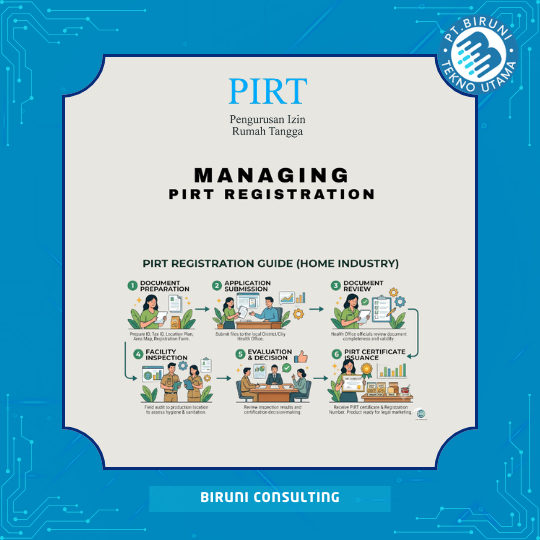
Guide to managing PIRT registration in Indonesia
PIRT (Home Industry Food Production Certificate) is a certification issued to home-based food businesses that produce processed food products in Indonesia. This certification confirms that the products have met the applicable food safety requirements and may be legally distributed within the Indonesian market. For micro, small, and medium-sized enterprises (MSMEs), obtaining PIRT is one of the most important steps in establishing a legally compliant food business.
Having a valid PIRT not only fulfills regulatory obligations but also increases consumer confidence in the safety and quality of food products. As Indonesia’s food industry continues to grow, distributors, supermarkets, retail chains, and online marketplaces increasingly require food products to possess valid business licenses before they can be marketed. Therefore, managing PIRT registration has become an essential investment for businesses seeking sustainable growth.
In addition, PIRT demonstrates a company’s commitment to producing safe, hygienic, and high-quality food products in accordance with Indonesian regulations. Businesses that obtain PIRT are generally in a stronger position to expand their market reach, strengthen their brand reputation, and compete in the increasingly competitive food industry.
Why Is Managing PIRT Registration Important?
Managing PIRT registration is an essential step for food entrepreneurs who want to operate their businesses legally while building long-term customer trust. A properly registered food product provides assurance that the business has complied with the applicable food safety requirements established by the Indonesian government.
Beyond regulatory compliance, PIRT registration also creates new business opportunities. Many distributors, retailers, supermarkets, and institutional buyers prefer working with suppliers whose products already possess official licensing because it reduces legal risks and demonstrates professionalism. Consumers are also more likely to purchase products that display clear legal information on their packaging.
For businesses planning to expand production capacity or distribute products throughout Indonesia, obtaining PIRT serves as a strong foundation for future business development while improving product credibility in the marketplace.
Regulations Governing PIRT Registration in Indonesia
PIRT registration is regulated under several Indonesian laws and government regulations designed to protect consumers and ensure food safety. These regulations establish the standards that home-based food manufacturers must follow before their products may be legally distributed.
Some of the primary regulations include:
- Law Number 18 of 2012 concerning Food.
- Law Number 17 of 2023 concerning Health.
- Regulations issued by the Indonesian Food and Drug Authority (BPOM) regarding the Home Industry Food Production Certificate (SPP-IRT).
- The Risk-Based Business Licensing System through OSS-RBA.
Understanding these regulations before submitting an application allows businesses to prepare the required documentation properly and minimize potential delays during the licensing process.
Requirements for Managing PIRT Registration
Before applying for PIRT, business owners should ensure that both their company and food products comply with the applicable administrative and technical requirements. Preparing complete documentation from the beginning significantly improves the efficiency of the review process and reduces the possibility of application revisions.
In addition to business legality, authorities also evaluate production facilities, product labeling, and the eligibility of the processed food category for PIRT certification. Careful preparation helps businesses complete the licensing process more efficiently.
Generally, the following requirements should be prepared:
- A valid Business Identification Number (NIB) issued through the OSS-RBA system.
- Processed food products that fall within the categories eligible for PIRT certification.
- Production facilities that comply with food hygiene and sanitation requirements.
- Product labels that comply with Indonesian food labeling regulations.
- Supporting administrative and technical documentation required during the application process.
Businesses should also ensure that all submitted information accurately reflects the actual production conditions to facilitate the verification process.
PIRT Registration Process
After completing the necessary requirements, businesses may begin the PIRT registration process. Each stage is designed to ensure that processed food products meet Indonesian food safety standards before entering the market.
1. Document Preparation
Applicants prepare business legality documents, product information, product labels, and all supporting documentation required for the registration process.
2. Application Submission
The completed application is submitted through the applicable government licensing system together with all supporting documents.
3. Document Verification
Authorities review the submitted documents to verify compliance with administrative and technical requirements.
4. Production Facility Evaluation
Where required, the production facility may be evaluated to ensure compliance with food hygiene, sanitation, and manufacturing requirements.
5. PIRT Certificate Issuance
Once all requirements have been successfully fulfilled, the PIRT certificate and registration number are issued, allowing the food products to be legally marketed throughout Indonesia.
Common Challenges in Managing PIRT Registration
Although the PIRT registration process is relatively straightforward, many businesses still experience challenges during the application process. These challenges often arise from incomplete documentation, insufficient understanding of regulatory requirements, or inadequate preparation before submission.
Some common challenges include:
- Incomplete administrative documentation.
- Product labels that do not comply with applicable regulations.
- Production facilities that do not fully satisfy hygiene requirements.
- Errors in completing application documents.
- Limited understanding of current PIRT regulations.
Proper planning and professional guidance can help businesses overcome these challenges while reducing the likelihood of delays or application revisions.
Benefits of Managing PIRT Registration
Obtaining PIRT certification provides significant advantages for food businesses, both from a legal and commercial perspective. Licensed products generally enjoy greater market acceptance and provide stronger confidence to consumers and business partners.
Some of the key benefits include:
- Legal distribution of food products throughout Indonesia.
- Increased consumer confidence and brand credibility.
- Easier cooperation with distributors, retailers, and supermarkets.
- Greater opportunities for business expansion and market development.
- Improved competitiveness within Indonesia’s food industry.
By securing proper licensing, businesses establish a solid foundation for sustainable growth while demonstrating their commitment to food safety and regulatory compliance.
Conclusion
Managing PIRT registration is an essential step for food businesses seeking to market their products legally in Indonesia. By preparing complete documentation, complying with food safety requirements, and following the appropriate licensing procedures, businesses can strengthen their legal standing while improving customer confidence and expanding their commercial opportunities.
Biruni Consulting provides professional consulting services to assist businesses throughout every stage of the PIRT registration process. From initial regulatory consultation and document preparation to application management and licensing support, our experienced consultants help ensure that your registration process is completed efficiently, accurately, and in full compliance with Indonesian regulations.
Contact Us
Biruni Consulting is a professional regulatory compliance consultant that assists businesses with PIRT registration and food product licensing in Indonesia.
Our services include:
- Consultation on PIRT registration requirements and licensing procedures.
- Assistance with Business Identification Number (NIB) registration through the OSS-RBA system.
- Preparation and review of administrative and technical documentation for PIRT applications.
- Consultation on food labeling compliance and applicable food regulations.
- End-to-end assistance throughout the registration process until the PIRT certificate is successfully issued.
With extensive experience in product certification and regulatory compliance, Biruni Consulting helps businesses obtain PIRT certification efficiently while ensuring full compliance with Indonesian regulations.
Contact Biruni Consulting today for professional consultation and comprehensive assistance with your PIRT registration needs.