
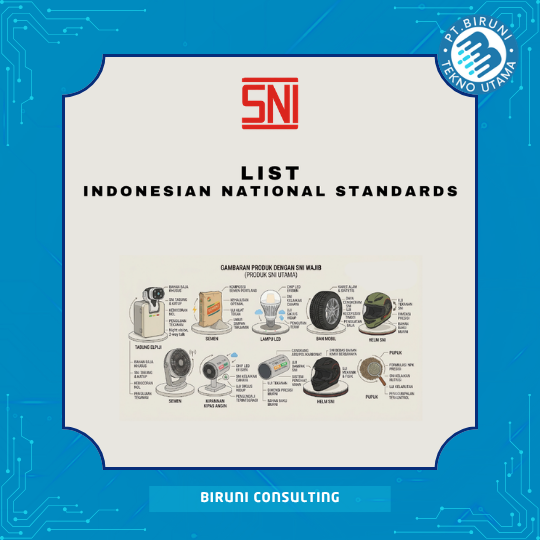
List of SNI Standards in Indonesia
The Indonesian National Standard (SNI) is a nationally recognized standard developed to ensure the quality, safety, performance, health, and environmental compliance of products, services, systems, and production processes in Indonesia. SNI plays an essential role in protecting consumers, improving industrial competitiveness, supporting fair trade, and encouraging manufacturers to produce products that comply with nationally accepted technical requirements.
The list of SNI standards covers thousands of standards across numerous industrial sectors, including electrical equipment, electronics, construction materials, automotive products, children’s toys, medical devices, food products, textiles, plastics, chemicals, and many other categories. While many SNI standards are voluntary, certain products are regulated under mandatory SNI requirements issued by the relevant government ministries before they can be legally manufactured, imported, or distributed within Indonesia.
For manufacturers, importers, distributors, and exporters, understanding the applicable SNI standards is one of the first steps before introducing products into the Indonesian market. Knowing which standards apply allows businesses to prepare the necessary documentation, product testing, certification procedures, and technical compliance activities required by Indonesian regulations.
What Is the SNI List?
The SNI list is a comprehensive collection of Indonesian National Standards that apply to various products, manufacturing processes, testing methods, management systems, and services. Each standard contains detailed technical specifications, testing requirements, quality criteria, safety provisions, terminology, and conformity assessment procedures applicable to a specific product or industry.
The SNI catalogue continues to expand and evolve as technology advances and industry requirements change. Existing standards are periodically revised, updated, replaced, or harmonized with international standards to ensure that Indonesian regulations remain relevant and effective. Therefore, companies should always verify that they are using the latest applicable edition of an SNI standard before beginning the certification process.
Product Categories Covered by SNI
SNI standards apply to a wide range of products used throughout Indonesia.
1 Household electrical appliances
2 Electrical installation products
3 Lamps and lighting equipment
4 Electrical cables and conductors
5 Motorcycle helmets
6 Safety footwear
7 Children’s toys
8 Construction materials
9 Automotive products
10 Steel and metal products
11 Pipes and fittings
12 Medical devices
13 Textile products
14 Food and beverage products
15 Household products
16 Plastic products
17 Rubber products
18 Industrial chemical products
Each product category is subject to its own technical standards, testing procedures, and certification requirements.
Mandatory and Voluntary SNI
SNI implementation in Indonesia generally falls into two categories.
Mandatory SNI
Mandatory SNI standards are enforced through regulations issued by the relevant government ministries or authorities. Products covered by mandatory SNI regulations must obtain certification before they can be manufactured, imported, sold, or distributed within Indonesia.
Examples commonly include:
1 Certain electrical lamps
2 Electrical cables
3 Motorcycle helmets
4 Certain children’s toys
5 Selected steel products
6 Certain household electrical appliances
Voluntary SNI
Voluntary SNI standards are adopted by companies to improve product quality, enhance customer confidence, and strengthen competitiveness. Although certification is not legally required for these products, many manufacturers voluntarily obtain SNI certification to demonstrate compliance with recognized national quality standards.
How to Determine the Applicable SNI Standard
Before applying for certification, companies should identify the appropriate SNI standard for their products by following several important steps.
1 Determine the product category.
2 Identify the product’s technical specifications and intended application.
3 Verify the applicable SNI standard.
4 Determine whether the standard is mandatory or voluntary.
5 Review the required laboratory testing and certification procedures.
Completing these steps helps companies prepare an efficient certification strategy while minimizing compliance risks.
How to Obtain SNI Certification
Product Identification
The certification process begins with identifying the product category, technical characteristics, materials, intended use, and applicable SNI requirements.
Document Preparation
Typical certification documents include:
1 Business registration documents
2 Technical product specifications
3 Product datasheets
4 Product labels and packaging information
5 Additional supporting documents required by the certification body
Certification Application
Applications are submitted to a Product Certification Body (LSPro) accredited by Komite Akreditasi Nasional for the relevant product category.
Laboratory Testing
Products undergo laboratory testing according to the applicable SNI requirements. Testing may include safety evaluation, electrical testing, mechanical testing, chemical analysis, durability assessment, and performance verification depending on the product type.
SPPT SNI Issuance
After successful completion of laboratory testing and conformity assessment, the Product Certification Body issues the SPPT SNI, confirming that the product complies with the applicable Indonesian National Standards and may legally bear the SNI mark.
Why Understanding the SNI List Is Important
Understanding the applicable SNI standards allows businesses to prepare for regulatory compliance before entering the Indonesian market. Early identification of certification requirements helps reduce delays, avoid import restrictions, and improve product readiness.
Compliance with SNI standards also demonstrates a company’s commitment to product quality, consumer safety, and regulatory responsibility. Certified products generally enjoy greater customer confidence and stronger market acceptance while supporting long-term business growth within Indonesia.
Contact Us
Biruni Consulting helps companies in the SNI certification process professionally and in accordance with applicable regulations in Indonesia
Our services include
1 Consultation on SNI regulations
2 Identification of applicable standards
3 Certification document preparation
4 Laboratory testing assistance
5 Certification processing until SPPT SNI issuance
With extensive experience in product certification in Indonesia Biruni Consulting helps ensure products comply with applicable standards and are ready for legal distribution in Indonesia
Contact Us for SNI certification consultation services and SPPT SNI processing