
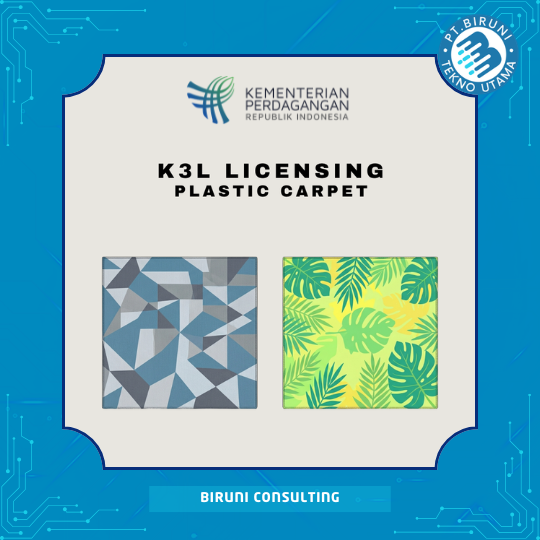
Guide to K3L Licensing for Plastic Carpet Products to Support Legal Market Distribution
Plastic carpets are floor covering products manufactured from polymer-based materials such as PVC, polypropylene, polyethylene, and other synthetic materials. These products are widely used in homes, offices, commercial facilities, educational institutions, places of worship, and industrial environments because of their durability, ease of maintenance, and resistance to moisture.
Since plastic carpets are used directly by consumers in everyday environments, they should comply with K3L (Safety, Security, Health, and Environmental) requirements before entering the market. K3L licensing helps ensure products use proper materials and controlled production processes.
In addition, K3L compliance helps manufacturers and importers evaluate raw materials, coloring substances, protective layers, and manufacturing methods to maintain consistent product quality and reliability.
Regulations Related to Plastic Carpet Products
Plastic carpet products should comply with regulations related to consumer protection and household product quality. These requirements help ensure products distributed in the market meet applicable standards.
Several relevant regulations include:
- Law No. 8 of 1999 concerning Consumer Protection, which regulates consumer rights regarding product safety and quality.
- Law No. 3 of 2014 concerning Industry, which relates to manufacturing quality control and industrial responsibility.
- Requirements related to household plastic products, including materials, labeling, and production processes.
Product labels also help consumers understand product specifications, materials used, and maintenance instructions.
Why Do Plastic Carpets Require K3L?
Plastic carpets are designed for long-term use in various environments. Therefore, product quality and material consistency are important considerations before market distribution.
K3L licensing helps ensure several important aspects, including:
- Suitability of raw materials used in production
- Quality of materials and manufacturing processes
- Product consistency before distribution
- Better support for legal market circulation
Products that meet applicable requirements are generally more trusted by distributors, retailers, and consumers because they demonstrate a higher level of quality management.
K3L Process for Plastic Carpet Products
The K3L process generally begins with product specification identification. This stage includes evaluating material type, dimensions, thickness, color variations, and finishing methods used during manufacturing.
After specifications are identified, manufacturers or importers generally prepare supporting documents such as:
- Product specifications
- Raw material information
- Product labeling information
- Manufacturer or importer details
The process may continue with evaluation or laboratory testing depending on product requirements. Testing results are used during the compliance assessment process before licensing proceeds further.
Benefits of K3L Licensing for Plastic Carpets
K3L licensing offers several advantages for manufacturers and importers seeking to improve product credibility and market acceptance.
Some key benefits include:
- Helping ensure products meet applicable requirements
- Supporting distribution through formal channels
- Increasing consumer confidence in product quality
- Improving business competitiveness
With proper licensing support, plastic carpet products can gain greater market opportunities and stronger commercial value.
Contact Us
Biruni Consulting provides professional assistance for plastic carpet K3L licensing services.
Our services include:
- K3L requirement analysis for household plastic products
- Technical documentation assistance
- Product material and specification consultation
- Laboratory testing assistance
- Certification and licensing support
We are ready to help ensure your plastic carpet products meet requirements before market distribution