
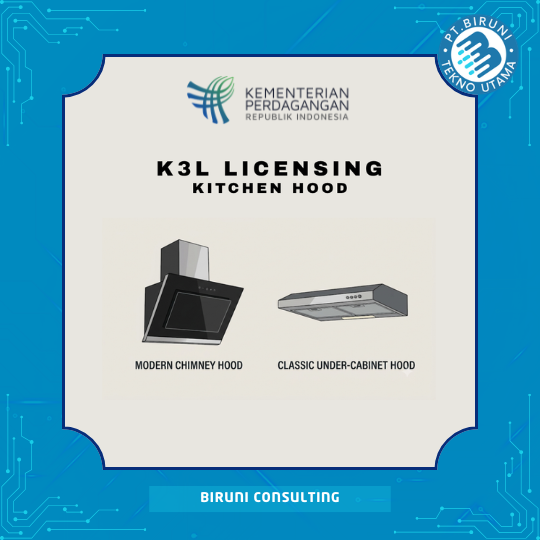
Guide to K3L Licensing for Kitchen Hood Products in Indonesia
A Kitchen Hood, also known as a Range Hood or Cooker Hood, is an electrical appliance installed above a cooking stove to remove smoke, steam, grease, cooking odors, and airborne particles generated during food preparation. It helps maintain better indoor air quality by improving ventilation, reducing humidity, and preventing grease accumulation on kitchen surfaces.
Kitchen hoods are widely used in residential kitchens, restaurants, cafés, hotels, commercial kitchens, and food service facilities. They are available in several configurations, including wall-mounted, island, under-cabinet, built-in, and chimney models. Many modern units feature multiple fan speeds, LED lighting, touch control panels, aluminum grease filters, activated carbon filters, automatic sensors, and smart control functions.
Because Kitchen Hoods operate using electricity and incorporate electric motors and ventilation systems, they should comply with applicable K3L (Safety, Security, Health, and Environmental) requirements before being marketed in Indonesia.
Why Do Kitchen Hoods Require K3L?
Kitchen Hoods operate in environments exposed to heat, steam, grease, and moisture. Safe electrical design and reliable mechanical construction are therefore essential to minimize risks associated with electrical operation.
Products that do not meet applicable safety requirements may increase the risk of electric shock, short circuits, overheating, motor failure, or even fire hazards. K3L registration helps ensure that products comply with Indonesian requirements for electrical safety, consumer protection, and environmental responsibility.
Important evaluation aspects include:
- Electrical safety and insulation.
- Protection against electric shock and short circuits.
- Ventilation system and motor performance.
- Product construction and material quality.
- Product labeling and operating instructions.
- Manufacturing quality assurance.
- Compliance with applicable Indonesian K3L regulations.
Meeting these requirements helps manufacturers strengthen consumer confidence while supporting legal product distribution.
K3L Licensing Process for Kitchen Hoods
The licensing process begins by identifying the product category and determining the applicable regulatory requirements.
Manufacturers or importers then prepare administrative and technical documentation before submitting the registration application.
Commonly required documents include:
- Technical product specifications.
- Manufacturer or importer information.
- Product and packaging photographs.
- Product labels.
- User manuals.
- Supporting technical documentation.
- Laboratory test reports where required.
After all required documentation has been completed, the K3L registration process may proceed according to Indonesian regulations until the K3L Registration Number is issued.
Benefits of K3L Licensing
Obtaining K3L licensing provides several important business advantages.
These benefits include:
- Supporting compliance with Indonesian regulations.
- Facilitating legal product distribution.
- Increasing consumer and distributor confidence.
- Reducing import and regulatory risks.
- Supporting retail, commercial, and project distribution.
- Improving competitiveness in the kitchen appliance market.
Proper K3L compliance demonstrates a company’s commitment to product safety, quality, and regulatory compliance.
Contact Us
Biruni Consulting provides professional K3L registration services for Kitchen Hood products.
Our services include:
- K3L registration assessment.
- Administrative and technical documentation assistance.
- Regulatory consultation.
- Laboratory testing coordination.
- End-to-end K3L registration support until the Registration Number is issued.
We are ready to help ensure your Kitchen Hood products comply with Indonesian K3L requirements before entering the market