
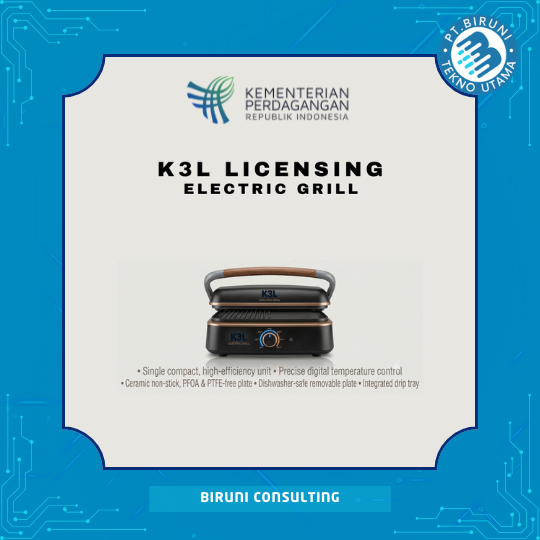
Complete Guide to K3L Licensing for Electric Grill Products in Indonesia
Electric Grill is an electric cooking appliance designed to grill, roast, and cook food using built-in electric heating elements instead of charcoal or gas. It is widely used in homes, restaurants, hotels, cafés, apartments, and commercial kitchens because it provides consistent heating, convenient operation, and easier cleaning compared to conventional grilling equipment.
Electric Grills are available in various configurations, including contact grills, open grills, tabletop grills, and smokeless electric grills. They are commonly used to prepare meat, poultry, seafood, fish, vegetables, sandwiches, burgers, sausages, and many other foods. Modern models often include adjustable thermostats, digital temperature controls, timers, removable grease trays, non-stick cooking surfaces, and overheating protection systems.
Since Electric Grills operate using electricity while generating high temperatures and include food-contact surfaces, manufacturers and importers should ensure compliance with applicable K3L (Safety, Security, Health, and Environmental) requirements before distributing the products in Indonesia.
Why Does an Electric Grill Require K3L Licensing?
Electric Grills are household electrical appliances that expose users to heat and electrical energy during normal operation. In addition, cooking plates and grill surfaces come into direct contact with food, making product safety and material quality particularly important.
K3L licensing helps demonstrate compliance with product safety and regulatory requirements.
Key compliance aspects include:
- Electrical safety.
- Safety of food-contact materials.
- Product durability and structural quality.
- Proper product labeling and user instructions.
- Manufacturing quality control.
- Compliance with applicable Indonesian K3L regulations.
Meeting these requirements helps improve consumer confidence while supporting legal product distribution.
K3L Licensing Process for Electric Grill Products
The K3L licensing process begins with identifying product specifications and determining applicable regulatory requirements.
Manufacturers or importers then prepare the necessary administrative and technical documentation before submitting the registration application.
Commonly required documents include:
- Technical product specifications.
- Manufacturer or importer information.
- Product and packaging photographs.
- Product labels.
- User manuals.
- Material composition information.
- Supporting technical documentation.
- Laboratory test reports when required.
After all documentation has been completed, the K3L registration process can proceed according to applicable Indonesian regulations.
Benefits of K3L Licensing
Obtaining K3L licensing offers numerous advantages for manufacturers and importers.
Major benefits include:
- Supporting compliance with Indonesian regulations.
- Facilitating legal product distribution.
- Increasing consumer and distributor confidence.
- Reducing import and regulatory risks.
- Supporting cooperation with retailers and online marketplaces.
- Strengthening product competitiveness in the Indonesian market.
Early compliance planning helps companies introduce products to the market more efficiently while reducing future regulatory risks.
Contact Us
Biruni Consulting provides professional assistance for K3L licensing services for Electric Grill products.
Our services include:
- K3L registration assessment.
- Technical and administrative documentation assistance.
- Regulatory consultation.
- Laboratory testing coordination.
- End-to-end K3L registration support.
We are ready to help ensure your Electric Grill products comply with K3L requirements before entering the Indonesian market