
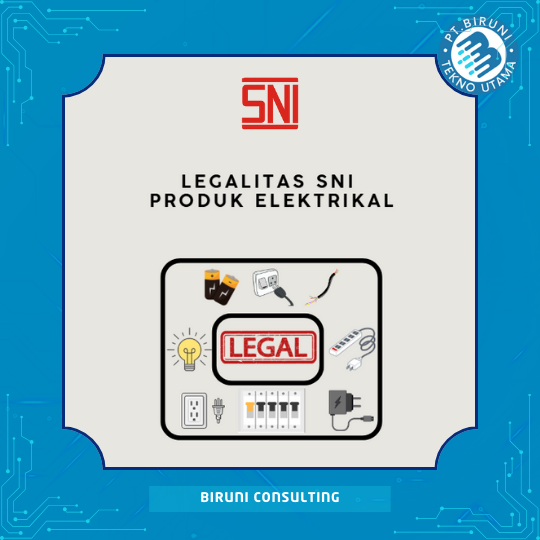
Understanding the Legal Status of SNI for Electrical Products
The legality of SNI for electrical products refers to mandatory compliance with Indonesia’s National Standard (SNI) before electrical products are manufactured, imported, or distributed within Indonesia. This legal requirement ensures product safety, quality, and protection for consumers and industries.
Electrical products are categorized as high-risk goods due to their direct connection to electrical systems, making SNI compliance mandatory.
Regulatory Framework
The legal basis for SNI compliance includes Law No. 20 of 2014 on Standardization and Conformity Assessment, Law No. 3 of 2014 on Industry, and Government Regulation No. 34 of 2018. The Ministry of Industry has also issued mandatory SNI regulations for electrical and electronic products.
Certification must be conducted through accredited Product Certification Bodies and testing laboratories recognized by the National Accreditation Committee (KAN).
Electrical Products Subject to Mandatory SNI
Mandatory SNI applies to electrical cables, conductors, switches, sockets, lighting products, and household electrical appliances. Products without valid SNI certification are considered illegal for market distribution in Indonesia.
Importance of SNI Legality
SNI legality provides legal certainty, enhances consumer trust, and improves product competitiveness. Non-compliant products may face administrative sanctions, product recalls, import restrictions, or business license revocation.
SNI Certification Process
The process includes application submission, quality management system audit, product testing at accredited laboratories, evaluation, certificate issuance, and periodic surveillance.
Conclusion
Compliance with SNI legality is a fundamental requirement for electrical products entering the Indonesian market.
Biruni Consulting offers comprehensive assistance for SNI certification, ensuring efficient, compliant, and reliable certification services for electrical products.