
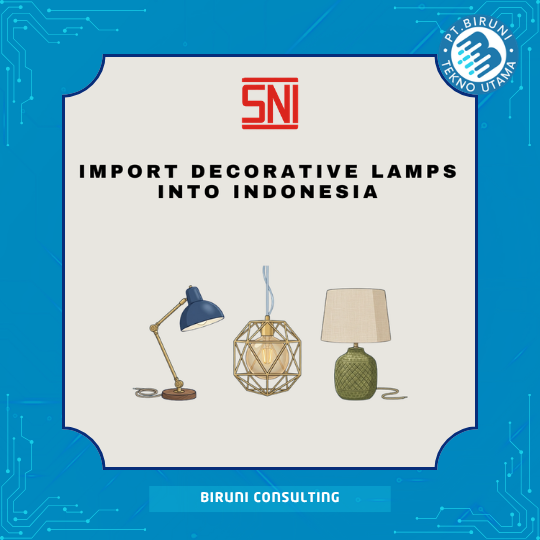
Guide to importing decorative lamps into Indonesia, including import requirements, SNI certification, customs procedures, technical compliance, and legal product distribution regulations
Decorative lamps are lighting products designed not only to provide illumination but also to enhance the aesthetic appearance of indoor and outdoor spaces. These lighting products are commonly used in residential properties, hotels, restaurants, cafés, luxury retail stores, office buildings, event venues, villas, apartments, and commercial construction projects.
Unlike standard lighting products that primarily focus on functionality, decorative lamps combine both lighting performance and visual appeal. Decorative lighting is often selected to improve ambiance, support architectural themes, and create premium interior or exterior experiences.
There are many categories of decorative lamps available in the global market, including:
- Pendant lamps (hanging lamps).
- Chandeliers.
- Decorative wall lighting.
- Decorative ceiling lamps.
- Decorative floor lamps.
- Decorative table lamps.
- Vintage Edison decorative lighting.
- LED decorative lamps.
- Smart decorative lighting systems.
Because decorative lamps contain electrical components, cables, lighting systems, and electronic elements, they are generally categorized as electrical and electronic products. Therefore, importing decorative lamps into Indonesia requires compliance with import regulations, product standards, and electrical safety requirements.
Can Decorative Lamps Be Imported into Indonesia?
Decorative lamps can be legally imported into Indonesia. However, importers must fulfill several legal, administrative, and technical requirements before products can be commercially distributed in the Indonesian market.
Importing decorative lamps involves much more than simply purchasing products from overseas suppliers. Businesses must ensure that products comply with Indonesian import regulations, customs requirements, product safety standards, and certification obligations.
Failure to comply with Indonesian requirements may lead to:
- Customs clearance delays.
- Product detention at ports or airports.
- Additional inspections by authorities.
- Distribution restrictions in Indonesia.
- Regulatory penalties or product rejection.
For this reason, companies importing decorative lighting products should understand the complete import process before shipping goods into Indonesia.
Regulations for Importing Decorative Lamps into Indonesia
The importation of decorative lamps into Indonesia is regulated by several government institutions responsible for trade, customs, technical standards, and product compliance.
The primary regulatory authorities include:
- Kementerian Perdagangan Republik Indonesia for import trade regulations and product circulation rules.
- Direktorat Jenderal Bea dan Cukai for customs supervision and import inspections.
- Kementerian Perindustrian Republik Indonesia for industrial product regulations and electrical equipment requirements.
- Badan Standardisasi Nasional for Indonesian National Standards (SNI).
Importers are responsible for ensuring that decorative lamp products comply with applicable Indonesian regulations before entering the market.
Depending on product type and technical characteristics, decorative lighting products may require additional compliance evaluation before distribution.
Requirements for Importing Decorative Lamps into Indonesia
Before importing decorative lamps, companies generally need to prepare administrative, import, and technical documentation.
1. Company Legal Requirements
Importers generally must possess:
a. Business Identification Number (NIB)
b. OSS (Online Single Submission) registration
c. Appropriate KBLI business classification related to trading or importing lighting or electrical products
These legal documents establish the company’s authorization to conduct import activities in Indonesia.
2. Import Documentation
Several import documents are commonly required during customs clearance.
These generally include:
- Commercial invoice.
- Packing list.
- Bill of Lading (B/L) or Airway Bill (AWB).
- Purchase Order (PO).
- Customs import declaration documents.
- Shipping documents from overseas suppliers.
Proper and complete documentation helps reduce customs delays and administrative risks.
3. Product Technical Documentation
Importers should also prepare technical product information.
Required technical documents may include:
- Product datasheets.
- Technical specifications.
- Product labels and packaging details.
- Electrical safety information.
- Installation manuals.
- User instructions.
Technical documentation is often required for product verification, customs inspection, and certification purposes.
Is SNI Certification Mandatory for Decorative Lamps?
Decorative lamps may require compliance with Indonesian National Standards (SNI) depending on the product category, technical specifications, electrical components, and applicable Indonesian regulations.
SNI implementation aims to:
- Ensure electrical safety for consumers.
- Reduce risks of electrical hazards and fire incidents.
- Maintain product durability and performance quality.
- Ensure products meet Indonesian technical requirements.
- Protect consumers from unsafe or low-quality products.
To demonstrate compliance, businesses may need to obtain the Product Certificate for the Use of the Indonesian National Standard Mark (SPPT SNI).
Certification is conducted through Product Certification Bodies accredited by Komite Akreditasi Nasional.
Importers should first identify whether their decorative lamp category falls under mandatory certification requirements.
SNI Certification Process for Decorative Lamps
When certification is required, decorative lamps may go through several evaluation stages.
1. Product Standard Identification
The applicable technical standards are identified based on product type and electrical specifications.
2. Technical Documentation Review
Technical documents are reviewed to ensure product compliance.
3. Laboratory Testing
Products may undergo testing in accredited laboratories.
Testing commonly includes:
- Electrical safety testing.
- Lighting performance testing.
- Material quality testing.
- Durability testing.
- Environmental resistance evaluation.
4. Certification Evaluation
Certification bodies evaluate testing results and supporting documentation.
5. SPPT SNI Issuance
If all requirements are fulfilled, the SPPT SNI certificate may be issued, allowing products to be legally marketed in Indonesia.
Import Process for Decorative Lamps into Indonesia
Importing decorative lamps into Indonesia generally involves several stages.
1. Selecting Overseas Suppliers
Importers should carefully verify supplier quality and reliability.
Key considerations include:
a. Product consistency
b. Manufacturing quality
c. Product certifications
d. Supplier credibility
2. Product Specification Verification
Technical product details should be reviewed carefully.
Key considerations may include:
- Voltage compatibility.
- Lighting type and fitting system.
- Material quality.
- Energy consumption.
- Safety specifications.
3. Certification Preparation
If required, companies should prepare for SNI certification before shipment or distribution.
4. Product Shipment
Decorative lamps may be shipped using:
- Sea freight.
- Air freight.
The selected logistics method depends on business needs, project deadlines, and shipping costs.
5. Customs Clearance
Upon arrival in Indonesia, customs authorities review import documents and product requirements.
This process may include:
- Documentation verification.
- Customs inspection.
- Import tax administration.
- Product release approval.
6. Product Distribution
After all requirements are fulfilled, decorative lamp products can be legally distributed throughout Indonesia.
Common Challenges in Importing Decorative Lamps
Importers may encounter several challenges during the import process.
Common issues include:
- Uncertainty regarding SNI obligations.
- Incomplete import documentation.
- Customs clearance delays.
- Product specification mismatches.
- Regulatory changes.
- Product testing requirements.
Because of these complexities, many businesses work with consultants to ensure smooth import and certification processes.
Benefits of Using Import and Certification Consultants
Professional consultants can help companies:
- Understand Indonesian import regulations.
- Prepare import documentation.
- Manage SNI certification requirements.
- Coordinate laboratory testing.
- Reduce compliance risks.
- Accelerate legal market access.
Contact Us
Biruni Consulting provides professional assistance for companies seeking decorative lamp import licensing and certification services in Indonesia.
Our services include:
- Consultation regarding decorative lamp import regulations.
- SNI certification assistance for lighting products.
- Technical document preparation.
- Laboratory testing coordination.
- Certification management until SPPT SNI issuance.
With experience in electronic and lighting product certification, Biruni Consulting helps companies ensure decorative lamp products comply with Indonesian regulations and are legally ready for market distribution.
Contact Biruni Consulting today for professional decorative lamp import consulting, SNI certification assistance, and product regulatory compliance services