
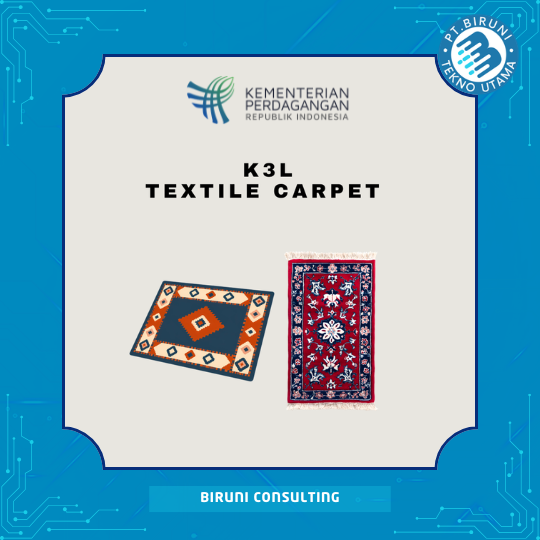
Complete Guide to K3L Compliance for Textile Carpets in Indonesia
K3L stands for Occupational Safety, Health, and Environment, a regulatory framework that ensures products distributed in the market are safe for users and environmentally responsible.
In the context of household textile products, K3L compliance for textile carpets refers to ensuring that carpet products meet safety, material quality, and environmental standards before entering the Indonesian market.
Textile carpets are floor covering products made from natural or synthetic fibers such as wool, polyester, nylon, or polypropylene, designed to provide comfort, insulation, and aesthetic value.
These carpets are widely used in various environments, including:
- Residential homes
- Hotels and hospitality facilities
- Office buildings
- Places of worship
- Commercial buildings and shopping centers
Although carpets may appear simple, several risks can arise if they do not comply with safety standards, including:
- Harmful chemical substances in textile dyes or fibers
- Fire hazards if materials are highly flammable
- Allergic reactions caused by certain textile materials
- Environmental impacts from synthetic material production
Therefore, manufacturers and importers must ensure that textile carpets comply with K3L standards before being distributed in Indonesia.
Regulations Related to Textile Carpet Products in Indonesia
Several Indonesian regulations support K3L implementation for textile products, including:
- Law No. 1 of 1970 concerning Occupational Safety
- Law No. 8 of 1999 concerning Consumer Protection
- Law No. 32 of 2009 concerning Environmental Protection and Management
- Regulations on market surveillance issued by the Ministry of Trade
In certain cases, textile products may also require compliance with Indonesian National Standards (SNI) and product testing before entering the Indonesian market.
Importance of K3L Certification for Textile Carpets
K3L compliance provides several benefits:
- Ensuring product safety for consumers
- Meeting Indonesian regulatory requirements
- Increasing consumer trust and brand credibility
- Supporting environmental sustainability
Products that comply with these standards demonstrate responsible manufacturing and regulatory compliance.
K3L Compliance Process for Textile Carpets
The compliance process generally includes:
- Identification of applicable product regulations
- Preparation of technical documentation including:
a. Textile material specifications
b. Fiber composition details
c. Manufacturer or importer information
d. Production process description - Laboratory testing to verify material safety, chemical content, and durability
- Compliance evaluation by regulatory authorities
- Issuance of K3L compliance documentation
- Post-market regulatory monitoring
Benefits of Using K3L Compliance Services
Professional consulting services help companies:
- Accelerate certification and regulatory approval
- Ensure documentation accuracy
- Reduce rejection risks during evaluation
- Provide professional assistance throughout the compliance process
Contact Biruni Consulting
Biruni Consulting is a professional consulting firm that assists companies with textile carpet K3L compliance services in Indonesia.
Our services include:
- Regulatory analysis and compliance identification
- Technical documentation preparation
- Laboratory testing assistance
- Certification and regulatory approval processes
With extensive experience in regulatory consulting, Biruni Consulting ensures that your textile carpet products comply with Indonesian safety, occupational health, and environmental regulations.